

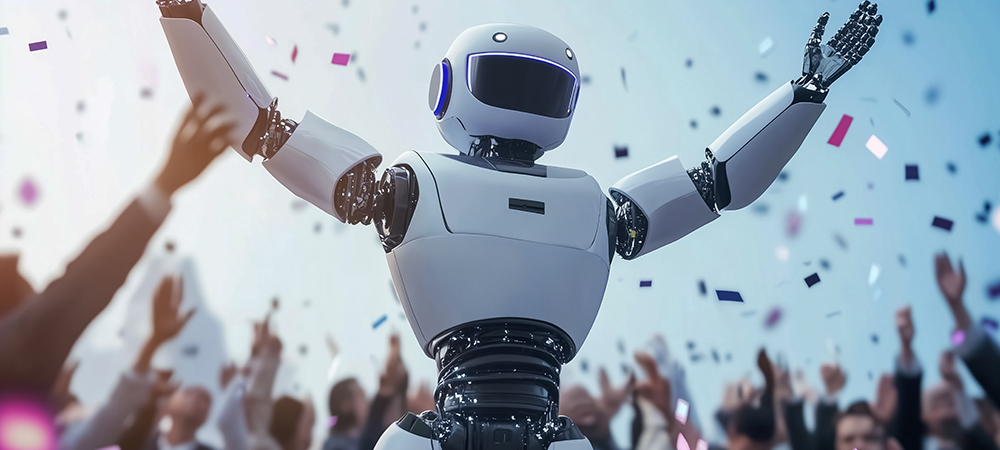
In a world increasingly shaped by algorithms and intelligent machines, the conversation around Artificial Intelligence (AI) has evolved from theoretical possibility to immediate reality. From the widespread adoption of generative AI to the rapid advancements in machine learning, humanity stands at the precipice of an intelligence revolution.
But what lies beyond today’s cutting-edge? What happens when AI truly surpasses human cognitive abilities across the board? This profound question was at the heart of the recent AI Appreciation Day, a unique global gathering where thought leaders, innovators, ethicists, and strategists converged to share their visions for the future of Artificial Superintelligence.
In this special feature, we bring you a collection of candid insights from these prominent voices, exploring the opportunities, challenges, and critical directions they believe AI is set to take, as we collectively navigate towards a more intelligent – and potentially super-intelligent – tomorrow.
Michele Tropeano, UK Country Manager at Fiverr
With the UK’s labour market undergoing a quiet revolution – and AI at the heart of this shift – Fiverr sees firsthand how artificial intelligence is transforming the way we work. Today, we are seeing new categories and jobs that didn’t even exist a few months ago, thanks to AI.
The opportunity is there and the forward thinkers are already embracing it. Our research finds more than one in five UK business leaders now rely on freelance talent to plug AI skills gaps, as full time employees struggle to keep pace. From this, we’re seeing the rise of a new kind of digital worker: agile, AI-native, and independent.
Vibe coding in particular has sparked recent debate – as code gets more generative, human taste becomes the differentiator. Vibe coding shifts the developer’s role from technician to that of a curator – transforming codes into design, feelings and experiences.
Ultimately, AI is only as powerful as the people behind it. On AI Appreciation Day, it’s time to not just celebrate the technology, but also the growing community of freelancers who are adopting it, innovating with it, and leading the way in this dynamic new era of work.
Chris Sander, Head of Sales EMEA at Vanta
As we acknowledge the power and opportunities AI brings to businesses, we must also acknowledge and plan for the risks. In cybersecurity, AI is a double-edged sword – it brings efficiency and reduces human error, but also must be managed appropriately. Despite the technology bursting onto the business scene, our research finds just 42% of organisations have, or are in the process of putting, a company AI policy in place.
So, organisations must get organised and get compliant. In addition to AI policies, pursuing frameworks like ISO 42001 and NIST AI RMF will raise the bar for AI security standards. While UK organisations may not need to meet every EU AI Act requirement, compliance is recommended, especially when engaging with AI in the EU. The more AI scales, the faster we need to scale compliance and control alongside it.
Without proper management, AI increases threats, risking reputational damage and customer trust. Organisations should become compliant today to safely unlock AI’s benefits and keep the UK at the forefront of technology innovation.
Christian Lund, Co-Founder at Templafy
ROI from AI becomes clear when it’s linked to specific, measurable outcomes, like streamlining document workflows, reducing manual work and ensuring brand compliance at scale. Our collaboration with Tietoevry is a great example: by implementing our platform, they were able to generate over 100,000 brand-compliant documents in six months, showcasing how automation can deliver tangible business value.
For B2B AI vendors, demonstrating ROI is about embedding AI into existing tools and workflows. Our AI-powered document agents integrate with platforms like Microsoft 365 to automate everyday document tasks – like retrieving the right slides or updating legal disclaimers – without disrupting how people already work. That combination of seamless integration and measurable productivity gains is what makes the value of AI real to clients.
Manoj Nair, Chief Innovation Officer at Snyk
Appreciation means balancing AI benefits with guardrails to keep software safe. One of the most transformative areas of AI is within software development, where a flywheel of faster innovation propels the whole field, making software developers’ lives both easier and more complex.
Just taking vibe coding as an example – it’s incredibly powerful for rapid prototyping and making software development more accessible. Yet it comes with important security considerations since you’re not directly controlling every line of code. The key is understanding both its potential and limitations.
These AI tools require human experience for sense-checking. Anything intended to be used in the wild, with user data, privileges, or that can be used as an attack vector by a bad actor, is likely to become a problem if experienced people aren’t overseeing the process.
Not all AI is equal. GenAI currently risks hallucinations and people-pleasing, but other types like symbolic AI solutions can be used to apply rules and fact check. It’s important with any AI process to insert human planning at the start, accountability during, and review for the output. Smart design can use specialist security AI, for example, as a guardrail for vibe coded outputs – encouraging both productivity and experimentation with trust and quality control.

Eduardo Crespo, VP EMEA, PagerDuty
There are numerous great use cases for AI to augment people power, such as within incident management. Technology infrastructure has grown increasingly complex, interdependent and often fragile. AI can be deployed to support maintenance and incident remediation to help reduce service downtime.
The volume of telemetry, number of API calls and any other measure of modern IT complexity also put unrealistic demands on IT operations management teams. AI solutions can help minimise ‘noise’, and when combined with human experience, lead to greater uptime and business resilience. And increasingly, technical architectures will include agent to agent operations and create room for strategic work on novel and less understood issues by humans.
Organisations must recognise their team skills and urgently prepare them for greater AI integration to support vital operations tasks. Human skills include investigation, analysis, fault finding and reverse engineering. Appropriate skills can be acquired through various sources, but mentoring and documentation within organisations is critical to keep in-house information current and widespread.
Samantha Wessels, President of EMEA, Box
This AI Appreciation Day, it’s clear that enterprises are moving beyond the AI hype to implement scalable and intelligent AI solutions that deliver real business outcomes. Successful AI implementation isn’t about the technology alone. It’s about reimagining your entire organization. The companies winning aren’t just automating—they’re fundamentally redesigning how work gets done.
At Box we see this transformation firsthand. Our recent State of AI in the enterprise survey reveals that 94% of enterprises are already leveraging AI to stay competitive and unlock valuable insights from unstructured data. Early adopters report impressive gains, averaging 37% productivity improvements. We’re witnessing a surge in the adoption of autonomous AI agents, with 87% of organisations now deploying these agents to accelerate knowledge work across the enterprise.
Organisations achieving high productivity and ROI integrate AI as a strategic asset, not just a tool. By doing this they’re driving innovation, streamlining operations, and enhancing business decision-making.
Pri Nagashima Boyd, VP of Data, Analytics and AI, Pleo
AI Appreciation Day is a timely reminder for finance teams to move beyond theory and start implementing automation to streamline operations. Referring to AI as merely the future of finance risks delaying the adoption of tools that are already driving real impact today. The gap is widening between teams leveraging automation – gaining visibility, reducing admin burdens, and freeing up strategic thinking – and those still on the sidelines.
While there’s increased momentum around adopting AI, integration should be thoughtful, measured and tailored. Start by identifying platforms that suit your workflows. Look closely at which tasks consume time and mental energy – these are often ideal candidates for automation. Next, ensure cross-functional teams are brought along the journey. Investing in AI literacy and upskilling is essential for long-term success
Finally, let go of the idea that you need the perfect system or perfect moment to begin. AI tools will continue to change and develop, but the sooner you start adapting, the easier it becomes to evolve with them.
George Moawad, Country Manager Oceania, Genetec
AI continues to attract interest, with the Genetec 2025 State of Physical Security Report finding 42% of security decision-makers expressing a keen interest in AI-driven solutions.
However, concerns about privacy, ethics, and data bias remain pivotal. Businesses now are increasingly focusing on responsible AI adoption, emphasising transparency, governance, and adherence to ethical standards.
Today, there’s a dual focus on AI’s potential for operational efficiency and the need for stringent governance protocols. For example, AI-powered analytics are enhancing situational awareness and reducing response times, however organisations demand assurances that such tools respect privacy and comply with regulatory frameworks.
AI’s role in security extends beyond analytics. Predictive modelling, for example, enables systems to anticipate and prevent potential threats before they materialise.
However, AI Appreciation Day is a good opportunity for Australian enterprises to be advised that this capability also raises concerns about over-surveillance and potential misuse. As a result, companies should establish AI oversight committees and protocols to address these challenges proactively.
Justin Hurst, Chief Technology Officer APAC at Extreme Networks
Across Australia, organisations are evaluating how much and how quickly they should lean into AI. Ignoring the trend is not an option, but jumping in without a plan is not viable either. Over the next year, businesses will need to set realistic, outcome-based goals for how AI-powered solutions and platforms will be deployed.
At the same time, IT leaders need to think beyond isolated tools and take a more holistic view, taking a strategic approach that combines talent development, infrastructure modernisation, and cultural transformation. For example, training in areas such as data literacy, AI systems, and network automation should be treated as a strategic priority, not an afterthought.
It is also worth remembering that AI is not just about squeezing out more efficiency. When implemented thoughtfully, it can create a feedback loop for continuous improvement. But this only works in environments where teams have the freedom to experiment, iterate, and occasionally fail without penalty.
The future of network engineering is not about replacing people with AI, but about enabling them to work smarter and more strategically. Enterprises that embrace this shift will be well-positioned to achieve greater agility, sharper competitive advantages, and faster innovation in an AI-driven world.

Simon Wistow, Co Founder, Fastly
With Australia’s largest publicly listed companies now required to report on greenhouse emissions to the ASX, increasingly businesses may look to their IT departments to ensure that their consumption of AI is sustainable.
To tackle the AI energy problem, we need to admit it does have a real environmental cost. Gen AI isn’t just some magical cloud outputting poetry and code, it’s millions of GPUs crunching vectors and consuming serious power, and most people don’t even realise how much.
Indeed, AI efficiency can be engineered at many layers, from the model architecture to the infrastructure beneath it. Organisations, for example, can work on research to make it so that large language models are more efficient to run. If they’re based on integers rather than floating point that should help reduce energy usage.
Another opportunity to achieve more sustainability would be the use of shared or standardised models that companies or public sector agencies could collaborate on, so we’re not all reinventing the wheel. This could involve reducing work between models or having a standard common model funded by a consortium of companies or governments or science institutions.
Innovation and sustainability aren’t mutually exclusive, but right now we’re very much leaning towards camp innovation and experimentation, no matter the cost. But there will come a point of diminishing returns. Training these models is incredibly expensive, so the industry will naturally shift toward optimisation, and companies focus on smaller, more efficient models instead of giant, general-purpose ones.
Survey data backs this up. Fastly’s 2025 AI Energy Pulse Check found that almost 45% of global respondents say they would prioritise energy-efficient models if the cost of AI use was linked to energy consumption. Some companies are also beginning to factor energy use into infrastructure decisions when choosing between edge and cloud deployments.
Ultimately, we need transparency in the industry so that collectively we can all work harder together to reduce the energy cost of training models and perform techniques like semantic caching to make querying much more efficient. The aim is not to duplicate work but to share effort and work on research so that LLMs are more efficient to run and we can reuse work between models.
We all need to start thinking about AI and the internet as something physical — because it is. It uses real resources, generates emissions, and has real-world consequences. It’s time for companies, developers and policymakers to take responsibility. That means optimising infrastructure, pushing for stronger regulation, and holding ourselves accountable. Because let’s face it: keeping this planet healthy is a lot easier than trying to terraform a new one.
Patrick Harding, Chief Product Architect, Ping Identity
AI Appreciation Day is a timely reminder of the incredible promise and growing complexity that AI brings to our digital world. From deepfakes to autonomous agents, AI has transformed the landscape of identity-based cyber threats, making it increasingly difficult to verify who, or what, is behind a digital interaction. Without the right safeguards, these technologies risk eroding the trust that underpins everything from financial services to healthcare. Yet AI is also a powerful tool for defence. When deployed responsibly, it can enhance real-time risk detection, behavioural analysis, and adaptive authentication, helping organisations prevent fraud while improving the user experience.
As AI continues to evolve and agents become more autonomous, now is the time for organisations to rethink identity models, ensure secure delegation, and prepare systems to recognise and authenticate not just people, but the intelligent processes acting on their behalf. Building and maintaining trust in every digital interaction is more essential than ever, and organisations must ensure their identity strategies evolve in lockstep with the technology driving today’s transformation.
Shaun Leisegang, General Manager – Automation, Data and AI, Tecala
Each year, AI Appreciation Day invites us to pause and reflect, not just on how far artificial intelligence has come, but on what it’s actually for. It’s a timely reminder that the real power of AI lies in what it enables people to do. AI is not a replacement for human potential, but rather a partner in unlocking it. It’s not about machines taking over, it’s about people stepping up.
As organisations increasingly adopt AI across their operations, the conversation is shifting from efficiency to empowerment. The best applications of AI aren’t those that eliminate roles, but those that eliminate friction – freeing people to do more meaningful, creative, and strategic work.
The future of work isn’t just about automation – it’s about meaningful augmentation. Rather than replacing people, AI agents are creating the conditions for people to focus on what humans do best: creativity, strategy, and complex problem-solving.
AI Agents embodies such an approach. These prebuilt agents are designed to integrate seamlessly into everyday workflows – handling tasks like expense claims, leave approvals, and email triage. Delivered through a flexible Automation-as-a-Service model, they help businesses move beyond pilots and proofs-of-concept, embedding automation where it matters most.
On AI Appreciation Day, it’s worth remembering that the value of AI isn’t in the code – it’s in what it unlocks for people. The real opportunity lies in redesigning work so that human talent is no longer wasted on low-value tasks.
Les Williamson, Regional Director, ANZ Check Point Software Technologies
The boom in AI, including generative investments within heavily regulated industries including financial institutions has unlocked immense opportunities for innovation, but it has also introduced new risk surfaces, particularly concerning data security, risk scoring, auditing, and regulatory compliance. Cybercriminals are quickly adapting, exploiting vulnerabilities in AI-driven processes. These include attacks such as data poisoning, manipulation of machine learning models, or the use of AI to conduct highly sophisticated cyberattacks. Furthermore, integrating AI tools into hybrid architectures can lead to inconsistencies in security protocols if not carefully governed.
A well-governed AI can revolutionise cyber security, streamline auditing processes, and ensure regulatory compliance across industries. This is all important in the light of a recent Check Point AI Security Report which found that AI services are used in at least 51% of enterprise networks every month. In addition, the report shows that 1 in every 80 prompts (1.25%) sent to GenAI services from enterprise devices was found to have a high risk of sensitive data leakage, and an additional 7.5% of prompts (1 in 13) contained potentially sensitive information. Here at Check Point, we’ve been using AI in our solutions for the last decade before it became popular with our ThreatCloud AI acting as the central nervous system for our security solutions keeping organisations both secure and productive without unnecessary disruptions.
Effectively communicating complex AI risks to business leaders and boards is essential. IT and cyber security risks, including those associated with AI, are no longer optional considerations – they are strategic imperatives. By analysing risks from both qualitative and quantitative perspectives, business leaders can better understand and weigh security risks against financial benchmarks. This approach helps justify security investments based on clear financial principles.
At the same time, adopting a proactive, preventive approach is critical for building trustworthy AI systems and avoiding costly retrofits or compliance failures down the line. Many AI risk frameworks emphasise embedding security and privacy measures by design during the AI development lifecycle. By addressing foreseeable privacy and ethical concerns early in the System Development Life Cycle (SDLC) and implementing robust protective mechanisms, organisations can prevent unauthorised access and misuse of data and models from the outset. Taking these steps allows businesses to manage AI risks effectively while fostering innovation and trust.
Pieter Danhieux, CEO and Co-Founder, Secure Code Warrior
The past three years have seen some remarkable progress in the AI space, with unprecedented implementation of the technology across multiple sectors.
Developments in agentic AI tools represent a new frontier for productivity and automation, but the real magic lies in how skilled humans utilise them to reach new heights in their roles. By freeing up repetitive tasks in well-tested, secure environments, everyone from software engineers to academic researchers can use their precious time more effectively to innovate and create. With that in mind, it is imperative we continue to place value in human expertise, experience and critical thinking, especially when it comes to secure navigation and implementation of these tools.
Hallucinations and AI-borne vulnerabilities remain a chief concern, and it’s AI-savvy humans applying their knowledge that will unlock the productivity gains many promise, with the safety and nuance required to truly move the needle.
Gareth Cox, Vice President Sales, APJ, Exabeam
As AI technologies continue to evolve, security teams must approach AI-specific risks with a multifaceted approach. The risks associated with overreliance on AI can be addressed through the following security tactics and methods:
- A strategy of knowledge management: To maximise the effectiveness of AI while minimising risks, businesses should focus on knowledge management strategies that customise AI systems to their specific problem domains. This can be achieved by employing Retrieval-Augmented Generation (RAG) to integrate domain-specific knowledge bases or by fine-tuning models to align with organisational needs.
- UEBA Detection: User entity and behaviour analytics (UEBA) can identity a legitimate user account exhibiting anomalous behaviour by using behavioural profiling and analysis to provide insights. It can also view multiple systems as a whole and identify the anomalous activity as it moves laterally across the network. Overall, it improves the speed of threat detection and response, making cybersecurity more effective and efficient in a rapidly evolving threat landscape.
- 24/7 monitoring: To detect and respond to threats as they happen, security teams should prioritise continuous, real-time monitoring. Additionally, employing bias detection and mitigation techniques can ensure fairness and reliability in AI results.
- Staff training: Awareness of the limitations and best practices for AI use is crucial. This includes training users to cross-verify AI outputs while remaining sceptical of overly confident responses.
By utilising a cautious and innovative security plan, businesses can maximise the potential of automated technology without jeopardising sensitive information or negatively impacting business operations.
Ezzeldin Hussein, Senior Director, Solutions Engineering, SentinelOne
On this World AI Appreciation Day, we pause to reflect – not just on how far we’ve come, but on the limitless future ahead. A decade ago, artificial intelligence was largely experimental, often misunderstood, and cautiously adopted. Today, it shapes our everyday lives – from personalised healthcare and smarter cities to securing cyberspace and decoding complex global challenges.
What once seemed like science fiction is now the pulse of progress. AI no longer just analyses data; it reasons, predicts, and adapts. It collaborates with humans, augments our creativity, and even safeguards our digital and physical environments. In cybersecurity, for instance, AI has shifted the balance – empowering defenders with predictive insights and autonomous threat response.
Yet this is only the beginning. The next frontier lies in ethical, responsible AI – where transparency, fairness, and human oversight are embedded into every algorithm. We are stepping into an era where AI becomes not just a tool, but a trusted partner.
As we appreciate what AI has already enabled, let’s also imagine what it can do – if guided by human values, inclusive design and bold innovation. The future is not about AI replacing us, but AI elevating us.

