


Indosat Ooredoo Hutchison’s President Director and CEO, Vikram Sinha, explains how the company’s landmark telecom merger, AI-first strategy and the Sahabat platform are positioning Indonesia to move from a digital consumption market to a creator of sovereign AI infrastructure.
Indosat Ooredoo Hutchison (IOH) is an Indonesian telecommunications provider which aims to become the most preferred digital telco of Indonesia. Its mission is to deliver world-class digital experiences, connecting and empowering every Indonesian.
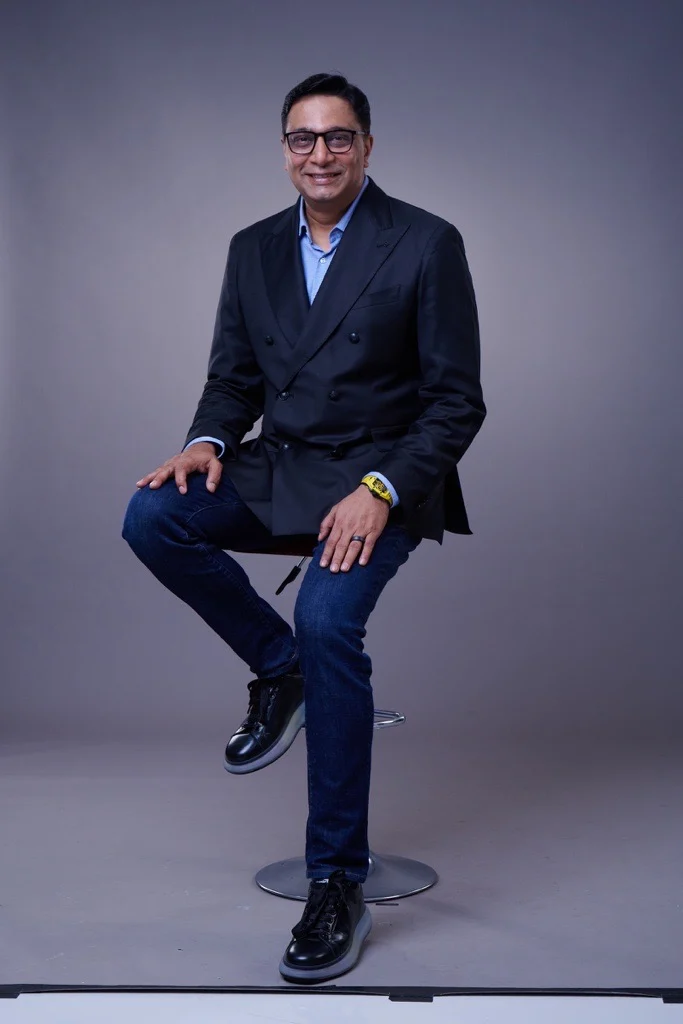
I began my career at Coca-Cola, so I understand the power of brand. Indosat is a 58-year-old company and the first to connect Indonesia to the world through satellites in the early days with Satelindo.
Fast forward to 2022 when Indosat became Indosat Ooredoo Hutchison (IOH) and four years on I can confidently say we have become a global playbook example of a successful telecom merger.
Telecom is all about scale and the merger gave us the platform to achieve this – making us one of the top operators globally. There are less than 10 operators in the world with close to 100 million customers and when we fulfilled that goal, we started wondering what was next.
Indosat is such an iconic brand and when we attached our purpose to it, all 3,000 employees truly rallied around it. The greater purpose for us is empowering Indonesia. The country is on a journey to becoming a developed nation; by 2045, it aims to achieve the Vision Indonesia goal. We truly believe AI can help accelerate that journey.
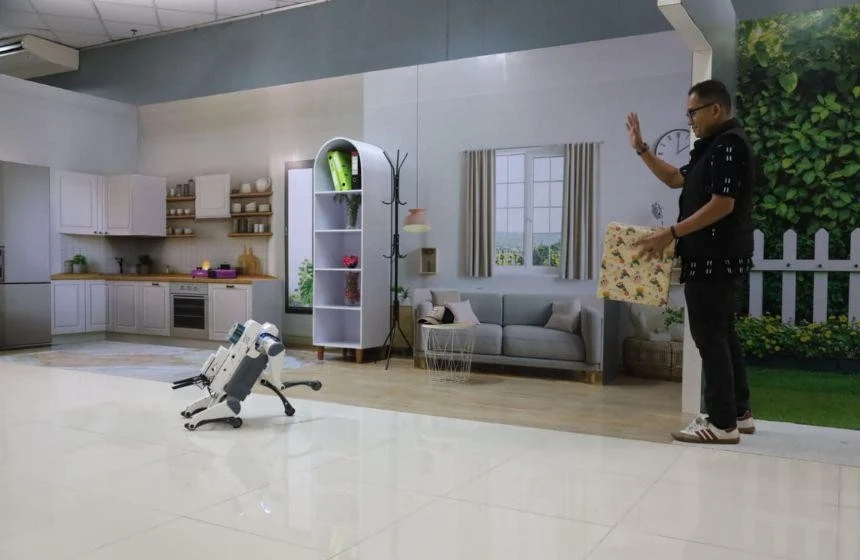
Unsurprisingly, research shows that AI can be a powerful enabler. It used to be the case where building infrastructure meant building roads and highways but today it refers to data. For a country like Indonesia, with 17,000 islands, this is mission critical.
This vision drove our AI North Star which we introduced during our 2023 Capital Market Day, representing our ambition. There aren’t many telecom companies that present such forward-looking ambitions in a Capital Market Day presentation.
Our strategy is built on three pillars. The first is becoming an AI-native telco which is extremely important. If we aren’t performing well in our core business, we can’t justify starting new ones, so this first pillar focuses on embedding AI into everything we do.
The second pillar is a focus on becoming an ‘AI techco’ – a concept which defines the urgent evolution of traditional telcos into technology-driven, AI-native platforms. We want to create a neo-cloud platform for the region, supporting sovereign workloads for Indonesia and providing strong security capabilities.
The third pillar is our role as a nation-shaper. As a major brand in Indonesia, expectations are high, but what drives us is a want to help build national capabilities. Today, the country is largely seen as a consumption market. With 280 million people, everyone wants to sell their applications here. Our goal is to help the country move from being a consumption market to becoming a creator of infrastructure and co-creation platforms. Our platform which supports this is called Sahabat.
I often reference the ‘five-layer cake’ model which is an idea popularised by Jensen Huang. Indonesia is uniquely positioned across these layers. At the foundation is energy: availability and price. Indonesia has surplus energy and very competitive pricing compared to other South-East Asian countries. Land, water and power are required to build this ecosystem.
The second layer is infrastructure, specifically data centres. We began this journey over a year ago and today we have 10 mW of live capacity, supporting everything from L40 GPUs to H100 systems and we were among the first to go live with Blackwell GB200. Our ambition is to scale to one gigawatt by 2030.
The third layer is chips. We have built a strong partnership with NVIDIA and were one of the first NVIDIA Cloud Partners in Indonesia. This partnership has helped us secure our supply chain during a time when GPUs, storage and networking components are in global shortage.
However, all of this means nothing if it does not create value for Indonesia. That is where Sahabat plays a central role.
Initially, Sahabat was launched as a web platform when Jensen Huang visited Indonesia. Recently, we launched the Sahabat mobile app which required securing sovereign storage and infrastructure within Indonesia so training could happen locally.
We use H100 GPUs to train and fine-tune the Sahabat model and collaborate with partners like Google and Alibaba. Instead of investing heavily in building a foundational model from scratch, we build on top of existing models while training sovereign datasets and fine-tuning them to preserve linguistic and cultural nuances.
Sahabat is not just a large language model, it has evolved into a platform that enables startups and innovators to co-create applications. One of the first applications we launched was a spam and scam protection system.
This is only the beginning for us – every month, we expect to release new applications made in Indonesia for Indonesia, using this full stack platform.
When we first launched Sahabat with Jensen Huang, it was about igniting hope and belief. Today, we have fully committed to the initiative and are receiving strong support from the Indonesian government.
Our focus is on three main areas. First, Sahabat will be a sovereign platform supporting innovation and startups in Indonesia. Innovation requires compute power and now we have that capability locally.
Second, we want to deliver citizen services that genuinely help people. We are not trying to compete with global platforms like ChatGPT or Gemini. Our focus is on supporting local languages and cultural nuances. Sahabat already supports regional languages such as Javanese and Sundanese, for example.
Third, we want to support local use cases that involve sensitive sovereign data. We are also developing future citizen services – for instance, helping people access government services or pay taxes through AI-powered tools.
This initiative is not just about Indosat, it’s a national ecosystem with many companies, startups, universities and researchers contributing.
We are also partnering with NVIDIA through the NVIDIA AI Technology Center (NVAITC) programme, where researchers collaborate with universities on projects that can be converted into real applications.
For us, this is about democratising intelligence and on a personal level I strongly believe that AI is a great equaliser. There are concerns AI will take jobs, but we view AI through a growth mindset where it is used to empower humans, not replace them.
This philosophy applies both within Indosat and across Indonesia. We invest in talent, empower employees to reach their full potential and apply the same thinking at a national level.

