


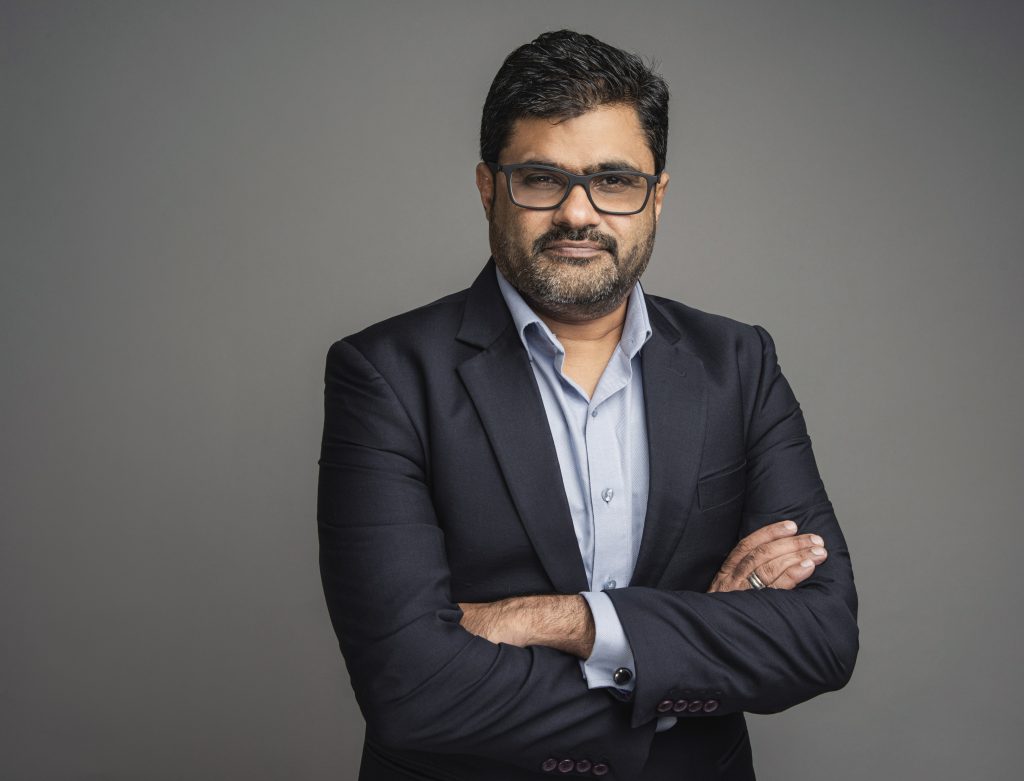
Owais Mohammed, Regional Lead and Sales Director, Western Digital – Middle East, Africa, Turkey and Indian Subcontinent, outlines SIX key trends shaping the future of cloud storage and data management in 2025 and 2026
The digital world is in the midst of a data explosion. According to projections, the global datasphere is on track to reach 181 zettabytes by the end of 2025, up from just 45 zettabytes in 2019. This staggering growth is fuelled by artificial intelligence (AI), the proliferation of Internet of Things (IoT) devices and the relentless demand for real-time analytics. For organisations, the challenge is not just storing this data, but doing so efficiently, sustainably and securely. As we look ahead, several key trends are shaping the next generation of storage systems.
Trend 1: AI and the relentless growth of data
AI is no longer a niche technology, it’s a primary driver of data creation and consumption. Machine learning models, generative AI and real-time analytics all depend on vast datasets, both for training and ongoing operation. The size of AI training datasets has grown exponentially, with median training sets ballooning from 42 billion data points in 2021 to over 750 billion in 2023 and this is set to increase further. This relentless growth puts unprecedented pressure on storage systems to deliver both capacity and performance.
To keep pace, organisations are turning to storage architectures purpose-built for AI. Technologies like NVMe over Fabrics (NVMe-oF) enable ultra-fast data transfer and low latency, which are critical for AI workloads that require rapid access to massive datasets. Specialised solid-state drives (SSDs) are emerging, offering higher input/output operations per second (IOPS) and optimised data paths for AI applications.
At the same time, high-capacity hard disk drives (HDDs) continue to play a vital role in supporting the massive storage requirements of AI workloads, providing reliable, scalable and cost-effective solutions for long-term data retention and archival needs. As AI continues to evolve, storage will need to be both high-capacity and high-performance, supporting the data-hungry demands of tomorrow’s innovations while staying economically and ecologically efficient.
Trend 2: Sustainability – The green imperative in data storage
The environmental impact of modern technologies is being discussed more and more. No wonder – artificial intelligence (AI), machine learning (ML) and the Internet of Things (IoT) consume enormous amounts of energy, both when processing and storing the constantly growing volumes of data. According to a current estimate, data centres account for around three percent of the global electricity consumption. With sustainability becoming a boardroom priority, organisations are seeking ways to reduce both energy consumption and environmental impact.
One of the most tangible ways to achieve this is by upgrading to higher-capacity storage drives. For example, transitioning from 26TB ePMR HDDs to 32TB UltraSMR HDDs to deploy 1 exabyte of storage can deliver significant savings such as 18.7% fewer racks, 18.8% fewer HDDs, and an 18.8% reduction in total power consumption including cooling and power usage effectiveness. These improvements lower the total cost of ownership (TCO), operational costs and directly reduce the environmental footprint of data centres.
Modern hard disk drives (HDDs) have made significant strides, offering greater capacity with lower power consumption per terabyte. At the same time, SSDs, while more expensive upfront, can provide substantial energy savings over their lifecycle, especially for high-performance workloads. Data management practices such as de-duplication and compression further reduce storage needs, cutting both energy and cooling costs.
Trend 3: The enduring role of HDDs and the rise of hybrid solutions
No matter how you slice it, HDDs are going to be around for a long time. The sheer volume of data generated by AI/ML, big data analytics and the cloud continues to grow at an exponential rate and all that data needs to be stored reliably and cost-effectively. While SSDs are gaining ground for certain high-performance applications, HDD technology advancements have led to larger storage capacities than ever before, making them indispensable for large-scale deployments.
When organisations deploy storage solutions at scale, one of the most important considerations is TCO. High-capacity HDDs consistently offer the lowest overall TCO when factoring in both capital expenditures (CapEx) and operational expenditures (OpEx), including power consumption, maintenance, repairs and the initial acquisition cost of storage devices. This cost efficiency enables organizations to maximise both operational efficiency and profitability, making HDDs the backbone of data storage now and in the future for hyperscale data centres, cloud providers, and enterprises managing massive volumes of unstructured data.
Recent innovations such as helium-filled drives and increased areal density have further improved HDD performance and efficiency, reinforcing their position as the go-to solution for affordable, scalable storage. With these advantages, it’s easy to see why HDDs remain a critical component of modern storage architectures and will continue to play a central role in the data-driven future.
Trend 4: The Middle East’s data centre boom and the need for scalable infrastructure
The Middle East is witnessing a surge in data centre investments, driven by ambitious government agendas to accelerate digital transformation. According to a recent report by Arizton, the region’s data centre market is expected to grow at a CAGR of over 9% from 2023 to 2029, with the UAE and Saudi Arabia leading the way through initiatives like Saudi Vision 2030 and the UAE’s National Digital Transformation Program. These projects are fueling demand for robust, scalable and secure storage solutions. Industry leaders such as Western Digital are actively contributing to this transformation by providing advanced storage technologies and expertise to support the region’s digital ambitions
Trend 5: Data sovereignty: The wish to physically hug your server
The UAE has become a regional leader in cloud, data and AI, underpinned by its 2023 National Cloud Security Policy. This policy sets clear security standards and prioritises local cloud infrastructure, making data sovereignty a top concern. For many organisations, there’s a real ‘wish to physically hug their server’ to know exactly where data resides and that it’s protected by national laws.
Beyond regulatory compliance, local data storage enables zero-trust security and delivers the low latency needed for advanced workloads like generative AI and IoT. By ensuring immediate access to locally stored data, organisations can accelerate model training and real-time analytics, while also benefiting from the flexibility of disaggregated storage architectures that optimise both performance and resource utilisation. As more countries adopt similar policies, data sovereignty will remain a defining factor in storage strategy.
Trend 6: Software-defined and intelligent storage: The next frontier
As organisations embrace hybrid and multicloud strategies, the shift toward software-defined storage (SDS) is accelerating. SDS decouples data management from physical hardware, giving IT teams the flexibility to deploy, scale and optimise storage resources with unprecedented agility. This is especially valuable as enterprises consolidate data centres and navigate increasingly complex infrastructures.
At the same time, AI is transforming storage management itself. Intelligent storage systems now leverage AI for tasks like automated data tiering, predictive optimisation and even threat detection, making storage more autonomous, resilient, and secure. As these capabilities mature, software-defined and intelligent storage will be central to building the agile, future-ready data infrastructure that modern organisations require.
Building the intelligent, sustainable storage ecosystem of tomorrow
The future of storage is about more than capacity, it’s about adaptability, efficiency and intelligence. Unified platforms, hybrid architectures and AI-driven management will define the next era of data storage. At the same time, sustainability and compliance will remain at the forefront, shaping both technology choices and operational strategies.
As organisations navigate this landscape, those who embrace innovation, balancing performance, cost, and environmental responsibility will be best positioned to thrive in a data-driven world. Storage is not just an IT concern; it’s the foundation upon which tomorrow’s breakthroughs will be built.

