


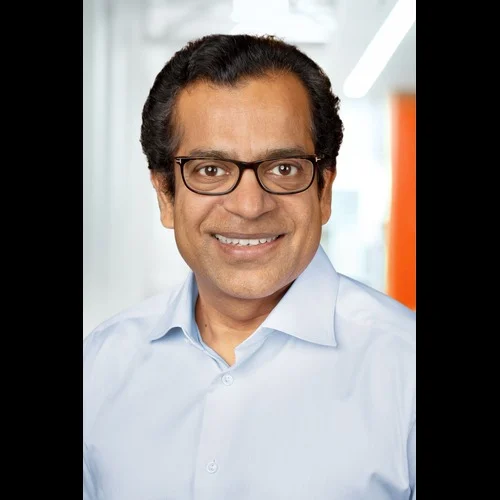
Sudhakar Ramakrishna speaks in first principles. As he tells it, SolarWinds’ most consequential choice last year was less a financial manoeuvre than a change of tempo – a move from the public markets to a private partnership with Turn/River Capital. “This was not just a shareholder transaction but a strategic step,” he said.
“Going private gives us more operational freedom and flexibility. It allows us to accelerate our roadmaps, execute long-term strategies without being overly constrained by short-term pressures, and explore different ways of expanding our go-to-market footprint.” For EMEA the promise is proximity. “We can engage more deeply with customers, understand their evolving requirements, and deploy resources in a more targeted way.”
Why go private now
Ramakrishna is candid about timing and intent. “It wasn’t that we set out actively to go private; rather, it was about recognising the opportunity at the right time,” he said. Turn/River had been tracking the company’s transformation, the investments in the platform, the road ahead.
“From their perspective, it was an attractive long-term investment,” he explained. “From ours, it provided an opportunity to accelerate those plans with a partner who could add value beyond capital.” Shareholders, he added, received a strong deal. Sometimes leadership looks counter-intuitive at first glance – then reads as preparation for resilience.
Relevance and scale
Asked for his operating creed, Ramakrishna reduces the role of a chief executive to two words: relevance and scale. “Relevance is about constantly asking: are we doing the things that matter most to our customers, both for today and tomorrow?” he said. Lose relevance and you lose your licence to operate.
“Scale is about ensuring that you have the right people, systems and processes in place to grow sustainably,” he added. It is not only revenue but capability – the capacity to take opportunities without hitting a wall.
Certain behaviours make the difference. “Curiosity is one of them – I make it a point to attend events like GITEX because every interaction, whether with a satisfied customer or a dissatisfied partner, teaches you something,” he said. “Adaptability is another. People often talk about agility, but I find adaptability – the ability to absorb setbacks, adjust course and still move forward – even more important.”
Then there is resilience and attitude. Not every initiative will work. “How you respond in those moments defines you as a leader,” he said. Over all of it sits capital allocation. Ideas always exceed budgets. “The discipline lies in choosing the initiatives that will yield the best return and serve customers most effectively.”
Platform as transformer
If there is a single lesson he returns to, it is the primacy of platforms. “Customers buy functionality, but as a vendor you must think about the platform that underpins it,” he said. A strong platform gives consistency of experience across products and the flexibility to innovate faster. He reaches for a child’s metaphor.
“I often use the analogy of a Transformer toy – something you can reshape quickly into different forms,” he said. “In the same way, a robust platform gives you the ability to adapt to new requirements, new technologies and new customer demands at speed.” For SolarWinds that mindset is the bridge between stability and change – deliver value today while preparing for tomorrow.
Global spine, local feel
Strategy meets texture in the Middle East. It starts, Ramakrishna said, with local teams who know their markets and keep their ears to the ground. “Many regional trends mirror global ones,” he added. “The acceleration of public cloud adoption is something I observed clearly during my time at GITEX last year.”
The task is to apply global innovation in ways that make local sense. Channel dynamics dominate. Partnerships with distributors and value-added resellers are critical. Even within the region, the UAE and Saudi Arabia diverge in regulation and expectation. “Our task is to understand these subtleties and overlay our global platform strategy on top of them,” he said. The point is not to reinvent products for each market – it is to provide local support, compliance and engagement that move outcomes.
Beyond the quarter
Ramakrishna’s view of the job spills past revenue. “Talent development is not the responsibility of HR alone,” he said. Systems and tools help, but leaders must nurture and grow people. The company’s purpose statement says it exists to enrich the lives of the people it serves – and the first group is employees.
“That is deliberate,” he said. “If we invest in our people, they in turn create value for customers, partners and shareholders.”
Digital policy sits close to execution. “I see it as fundamental to scale,” he explained. Without strong digital systems, growth stalls. It ties directly to security – “Secure by Design” is a guiding initiative. “In today’s environment, digital transformation and cybersecurity are two sides of the same coin,” he said.
Sustainability rounds out the brief. Environmental commitments matter, as do sustainable business practices, governance and trust. “These elements are increasingly what customers, employees and investors look for in companies,” he said.
Complexity without relief
Looking ahead, he names three dynamics that will not soften. “First, complexity will only increase,” he said. Interconnected, globalised, multi-layered environments are here to stay. “Second, talent shortages will remain a challenge,” he added.
There will never be enough skilled professionals to meet demand fully. “Third, technology investments will continue to rise, but they will not always keep pace with the growing complexity,” he said. The pressure is clear – achieve more with less.
Against that backdrop, certain tools matter. “AI, SaaS and cloud will play a pivotal role,” he said. They are not ends in themselves but enablers – ways to simplify complexity, augment human capability and deliver better outcomes for customers.
Outside in
His advice to peers comes in threes. “Adopt an outside-in perspective,” he said. Spend time in the field. Talk to customers, partners, employees and policymakers before you shape plans. “Be disciplined in capital allocation,” he continued.
The build-it-and-they-will-come mindset no longer works. Invest only where you can create real value. “Focus on developing not just talent but values,” he said. Skills can be taught. Values shape culture, resilience and long-term sustainability. A company that invests in both will be stronger in adversity.
The through-line holds. Relevance and scale. Platforms that reshape without breaking. Local texture on a global spine. “Sometimes leadership is about making choices that may seem counter-intuitive at first glance,” Ramakrishna said, “but are in fact about creating the right conditions for sustainable growth and resilience.”

