

AI workloads are disrupting data centre power dynamics. In this interview, Brandon Smith, VP of Global Sales and Product at ZincFive, discusses why traditional battery chemistries struggle with rapid, AI dynamic loads and how ZincFive nickel-zinc (NiZn) technology delivers high power density in a safer more sustainable solution. Smith highlights the BC 2 AI UPS battery cabinet’s ability to reduce physical footprint by up to 50% while lowering total cost of ownership (TCO) and meeting the evolving infrastructure demands of the AI era.

AI workloads are fundamentally changing data centre power profiles, shifting from predictable loads to sudden, high-intensity demand; how is this redefining what reliable power looks like in the AI era?
In recent conversations with industry leaders the consensus on data centre infrastructure has shifted dramatically. Only 18 months ago, our warnings regarding the impending strain on electrical architecture, specifically battery storage were largely discounted. Today, the industry is no longer speculating; operators are actively struggling with the day-to-day realities of a power-hungry AI landscape.
As a company, we have witnessed a fundamental transformation in power demand profiles. Traditionally, we managed steady-state loads with predictable shifts and state changes that took multiple seconds. In that era, battery systems were merely a contingency utilised perhaps once or twice a year for brief durations.
Now, however, battery technology has transitioned from a passive backup to a critical enabling technology. To maintain peak performance for GPU workloads and parallel processing, high-performance energy storage is an absolute prerequisite. These systems must now mitigate highly dynamic workloads and the aggressive ‘ramp up’ and ‘ramp down’ phases inherent in training large language models (LLMs).
We have moved away from the ‘cookie-cutter’ predictability of the past. Modern power requirements are unique, custom, and vary from site to site and workload to workload. For the cybersecurity and infrastructure professional, this volatility represents a significant new frontier in operational resilience.
Reliability in the AI era is no longer about standby duration; it is about delivering immediate, repeatable high-power performance on demand – a requirement our technology is purpose-built to meet.
AI Dynamic Power events can spike up to 15x idle loads in milliseconds; what risks do these instantaneous surges create for traditional lead-acid and lithium-ion systems that were never designed for immediate power delivery?
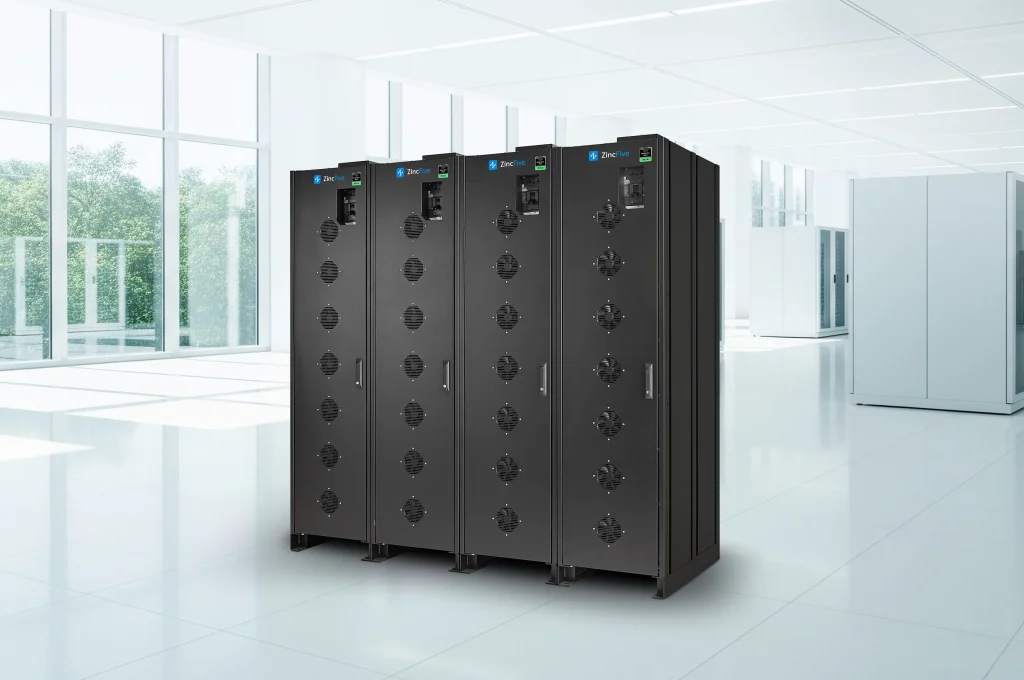
None of the legacy technologies on the market were designed to handle 150% power surges occurring within a 50-millisecond window. At ZincFive, we have spent the past year testing specifically against these AI-driven workloads. Our BC 2 AI UPS Battery Cabinet , launched last November, uses our proprietary nickel-zinc chemistry to manage and stabilise these rapid fluctuations. By preparing for this shift early, we’ve positioned ourselves to better support the next generation of AI infrastructure.
However, the challenge extends beyond battery chemistry, as we are experiencing a fundamental stress test of the entire ecosystem. Traditional breaker configurations and Uninterruptible Power Supply (UPS) designs are being pushed to their limits.
The transition from steady-state backup to managing dynamic workloads, where power demands swing between 40% and 150% in the blink of an eye demands a total reassessment of traditional engineering. For those tasked with maintaining the integrity of high-compute environments, the old ‘safety net’ approach is no longer fit for purpose.
Why have Immediate Power Solutions become critical not only for protecting GPUs and workloads, but also for preventing AI-driven volatility from cascading back into the utility grid?
At ZincFive, our focus remains on the Immediate Power Solution (IPS), the functional antithesis of traditional long-duration energy storage. While conventional systems are engineered for discharge cycles spanning several hours, an IPS is designed for high-performance, short-duration events ranging from 30 minutes down to mere milliseconds.
Modern AI workloads do not require a four-hour battery to solve a fifty-millisecond stability crisis. Instead, they demand a system capable of extremely rapid and frequent discharging and recharging throughout the training model’s duration.
In the contemporary data centre, the UPS must act as a bridge. It requires an IPS to manage instantaneous GPU surges while transitioning to long-duration assets, such as generators or gas turbines, for sustained outages. To achieve maximum capacity and operational integrity, these GPUs now fundamentally require IPS architecture. By deploying chemistry specifically tuned for rapid-fire responsiveness rather than slow-burn storage, we address the specific technical vulnerabilities inherent in high-density parallel processing.
Delivering immediate, high-power output repeatedly is a major technical challenge; how does nickel-zinc chemistry provide the cycle life, power density and inherent safety needed for AI workloads without the thermal risks of lithium-ion?
The chemical composition of the battery is the first line of defence in high-compute environments. Nickel-zinc chemistry is inherently optimised for high-power, short-duration discharges, the Immediate Power Solution essential for modern workloads.
Safety remains the paramount concern. Rapid discharging generates significant heat; for volatile chemistries like certain lithium-ion variants, this is often a ‘death sentence.’ These systems risk thermal runaway and fire, necessitating extensive mitigation such as fireproofing, deflagration vents and strict adherence to complex building codes.
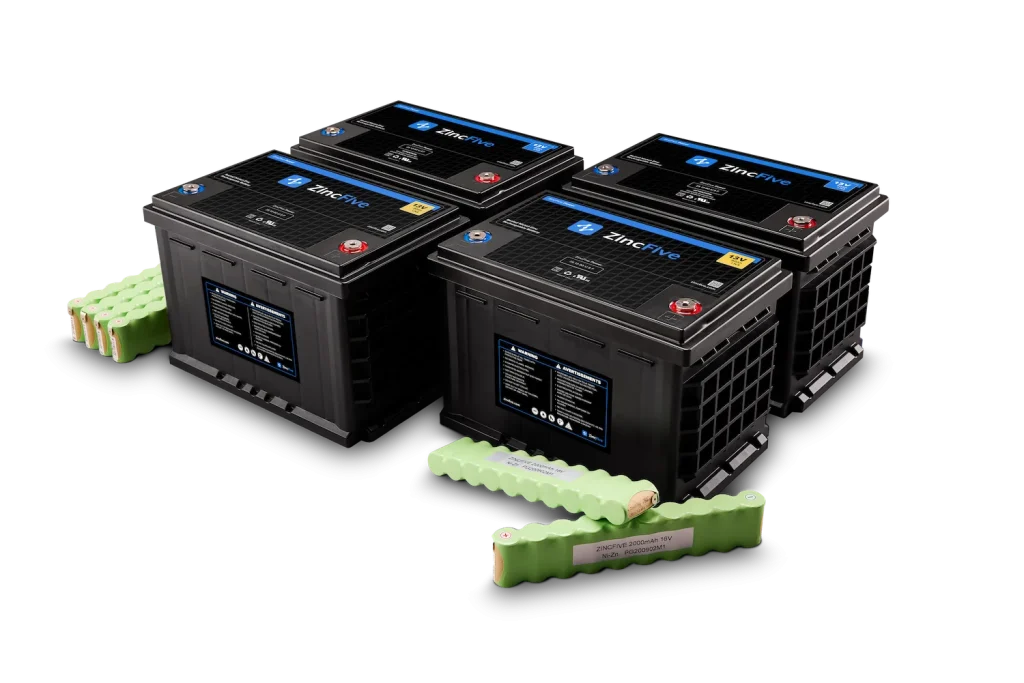
In contrast, nickel-zinc is non-volatile without any risk of thermal runaway at the cell level. This profile is a game-changer for data centre architecture. Traditional, higher risk batteries must be sequestered in hardened enclosures, far from the sensitive IT white space. However, as AI demands push batteries closer to the rack, blurring the lines between the ‘black space’ of utilities and the ‘white space’ of compute, chemistries like NiZn allow for safe deployment in proximity to GPUs. By removing the volatility risk, we eliminate the need for cumbersome safety infrastructure, allowing for a denser, more integrated and significantly safer ‘grey space’ environment.
Space, cost and performance are increasingly linked in AI infrastructure; how does the BC 2 AI UPS battery cabinet reduce footprint and total cost of ownership by combining immediate power response and reliable backup power in a single system?
Total Cost of Ownership (TCO) in data centre environments is often misunderstood as mere upfront expenditure. In reality, it encompasses footprint, maintenance, fire suppression and cooling requirements over a 15-year lifecycle.
Nickel-zinc chemistry offers a superior power density that is uniquely suited to the rapid-fire, 50-millisecond cycling of AI workloads. Legacy chemistries often require infrastructure oversizing or deploying redundant battery cabinets simply to distribute thermal stress and mitigate degradation. This inefficiency inflates both capital expenditure and spatial requirements. Because nickel-zinc is inherently resilient to high-frequency cycling and operates effectively at elevated temperatures, we eliminate the need for this artificial scaling.
The result is a tangible reduction in physical footprint, often by 20% to 50%, and a significant decrease in the need for specialised cooling and fire-rated infrastructure. In the context of AI, these spatial advantages are amplified. By removing the requirement for burn-rated walls and complex suppression systems, the BC 2 AI provides a streamlined, compact solution that drastically lowers TCO while maximising the revenue-generating white space available for compute.
As AI infrastructure scales rapidly, sustainability can no longer be an afterthought; how does ZincFive’s 25-50% lower lifecycle carbon footprint help customers pursue AI growth while still meeting environmental and ESG commitments?
For ZincFive, sustainability is not a transient trend or a political pivot, it is a fundamental design principle. Nickel and zinc are 100% recyclable for reuse in other applications – without the energy-intensive smelting processes required by traditional lead-based systems. This significantly reduces carbon emissions during the recycling phase, offering a level of efficiency that current lithium-ion processes, which remain environmentally ‘grey’ and technically complex, cannot match.
The environmental benefits extend across the entire lifecycle. From mineral extraction to deployment, our chemistry offers a 25% to 50% lower carbon footprint compared to lithium-ion and lead-acid. For our clients, particularly those operating under the stringent ESG frameworks of the UK and EU, sustainability is no longer an optional extra, it is a regulatory and corporate mandate.
By integrating the BC 2 AI system, data centre operators no longer face a zero-sum game between performance and planet. We provide a high-performance IPS that enables maximum GPU compute and operational efficiency, while simultaneously fulfilling aggressive decarbonisation targets. In the evolving AI landscape, achieving peak infrastructure resilience must not come at the cost of our environmental commitments.
As AI pushes data centres toward faster, denser and more power-intensive designs, how do you see ZincFive’s Immediate Power Solutions evolving to support the next generation of digital and critical infrastructure?
ZincFive possesses the essential building blocks for this transition: our monobloc and cylindrical cell formats. Both carry the hallmark safety, sustainability and high-power density required across the entire data centre ecosystem, from engine starting to intensive GPU workloads.
Looking ahead, the primary trend is stratification. The data centre market is fracturing into diverse architectural directions with long technology tails. While current deployments will persist for the next five years, the next generation of facilities will demand vastly different configurations. We anticipate a shift toward a mix of DC-only architectures, high-voltage and medium-voltage systems.
As the industry moves away from monolithic design, success will depend on a diverse product portfolio. The market is splitting and infrastructure providers must meet it where it stands today, while remaining agile enough to pivot for the demands of 2030. At ZincFive, we are engaging with customers daily to ensure our nickel-zinc ‘Lego blocks’ are ready to support this stratified future, ensuring reliability regardless of the chosen power trajectory.
Watch ZincFive’s Brandon Smith explain why nickel-zinc is the safer, more sustainable solution for modern data centres. Watch the Deep Dive Here

