

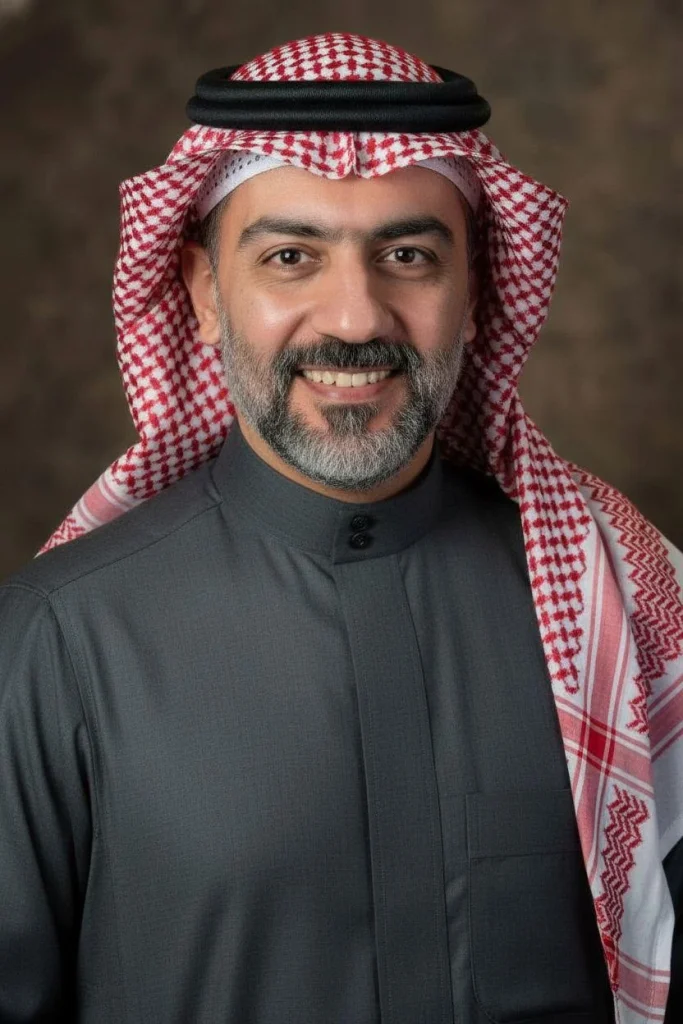
At LEAP 2026, Khalid Aljamed, General Manager – META at Submer, discusses the company’s end-to-end approach to AI infrastructure, the importance of flexible cooling architectures and how enterprises can modernise existing facilities while protecting their investments.
What is Submer showcasing at LEAP this year?
We’re actually announcing a number of agreements and MoUs with both local system integrators and international solution providers. We’re showcasing our service capabilities for end-to-end data centre delivery, as well as hybrid solutions for data centre power, cooling and deployment.
Infrastructure now the biggest barrier to scaling AI, and how does Submer’s full-stack approach address the challenges customers face?
It depends on how you define infrastructure. We see it as having four pillars: land, power, cooling and HVAC, and IT and applications. The challenges vary by region. In the Middle East, land is generally not a barrier, whereas it can be in Europe. Power is a significant challenge in the US, while the Middle East has considerable renewable energy potential and governments are already investing heavily in this area.
Our focus is primarily on power, cooling, HVAC and power efficiency. Supply chain is another critical consideration because it affects speed to market and project delivery, although I would describe it as a pillar of infrastructure delivery rather than infrastructure itself.
Submer is a full-stack AI infrastructure provider, but that does not mean we deliver every component ourselves. We provide advisory services from land selection through to application definition and project outcomes. We also undertake design and help customers select the right technologies.
We do not focus on construction because we believe that is better handled by local players to ensure smooth delivery. However, we provide project management and work closely with local suppliers, contractors and EPCs to coordinate the construction elements of these projects. Our role is to bring the different components together and ensure the infrastructure is designed and delivered around the customer’s requirements.
Do you see the power and cooling aspects of AI becoming as significant a barrier as GPU availability?
Yes. Today, in the US, for example, the biggest issue from a legislative perspective is not access to GPUs. It’s actually states allowing the construction of data centres because, at least in the US, the model is that the more power data centres consume, the higher the monthly bills for households become. People are not accepting this.
Another element is how you integrate a data centre project into the power grid and ensure that, during peak periods, the data centre’s consumption will not take down the grid that also supplies hospitals and communities. This is a real problem in the US and Europe today.
We still don’t have legislation for this in Saudi Arabia, but one of the options is to have an isolated power supply.
Liquid cooling used to be a specialised technology. Do you think it has now become critical for AI workloads?
It is critical, but most customers today are not necessarily greenfield. A lot of them are brownfield. You have to factor in that not everyone is ready for full liquid cooling, which is fine.
A lot of vendors are also not 100% supporting technologies such as immersion cooling. They might lean towards DLC, or direct-to-chip cooling.
What we find is that it’s very practical and pragmatic to be flexible with your approach to cooling in general. Certain elements might need to be air-cooled, other elements within the same data centre might be directly liquid-cooled and other elements can use a hybrid approach.
How can enterprises modernise their existing data centres without having to rebuild everything to accommodate AI?
To be very honest, I would say it depends on how the data centre was built. If it was built with modularity in mind, whether that’s power modularity, space modularity or HVAC modularity, then there are workarounds to retrofit and repurpose those data centres.
We have a project in Abu Dhabi that was completed three or four years ago, where AI was not a consideration. But because it was built with future-proofing in mind, you can now take certain elements out and replace them with more modern elements that are more suitable for AI and GPUs.
However, if you’re talking about an oil and gas, financial or government facility that was built perhaps 20 years ago, I think it will be a big challenge to preserve the majority of the infrastructure without having to replace many elements. That’s just a reality of technology.
When you talk to your clients, especially in Saudi Arabia, is energy efficiency top of mind for them?
Yes. Again, it’s about the availability of power. Although it’s not as big an issue in this part of the world as it is elsewhere, we still need to consider that sustainability is very important, whether you’re talking about the UAE’s transformation vision, Saudi Arabia’s transformation vision or other governments such as Kuwait and Qatar.
The cost of power per megawatt is also a consideration. The direct availability of power generators and power infrastructure in certain areas is not always a luxury. It might be logistically prohibitive to build a new power plant, so you need to use whatever power you have available.
So yes, to answer your question, power is not just about cost. It’s also about the efficiency of the data centre. When we start talking commercially about the profitability of that data centre, one element people don’t consider is that the more power and heat a data centre produces, the faster you consume the physical hardware.
If you have an investment of three, four or five billion in GPUs, the more you push the limits of power consumption and heat generation, the faster you are actually degrading that hardware. So it’s not just sustainability from a green perspective. It’s also about protecting the investment.
You are combining physical infrastructure with monitoring software. How important is real-time monitoring and intelligent infrastructure management?
Monitoring has several elements. There’s the application, availability and cybersecurity elements. At this stage, although we have plans, what we’re concerned with is monitoring power consumption, readiness, the availability of different cooling systems, power consumption and the load-balancing capabilities of data centres.
I believe it’s an element that we bake into the design of the data centre. It’s not something you add on. When you’re thinking about how you’re going to operate and run that data centre, you need to consider whether it’s built for GPU as a service, whether it’s a commercial data centre or whether it’s a sovereign AI data centre. That’s one element we factor into the design.
Tell us a little about the data centre design and build service that you offer, particularly for greenfield projects.
Consider us an architecture house. We sit with the customer just as you would if you were trying to build a building, a hotel or a house. You would ask how many rooms they need and how many tenants they expect to have.
We start with the same questions. What kind of applications are you planning to use? What kind of commercial utilisation are you thinking about? What’s the lifecycle you’re planning for that data centre?
The availability of power comes into question. The availability of land comes into question. Then there are chip considerations. Are you going to have a pure NVIDIA data centre? Is it an AMD data centre or a Qualcomm data centre? Is it going to be an inference or a training data centre, for example, if we’re talking about AI?
Those are just a sample of the many cycles we go through to determine the best data centre and the best architecture needed. Then we give the customer options because we try to be very technology-neutral. We are heavily focused on outcomes.
That’s why we align with multiple vendors, whether they are chip manufacturers, server manufacturers, power solution providers or data centre container builders. Based on that, just like any business transformation consultancy, we give the customer viable options and move forward from there.

