


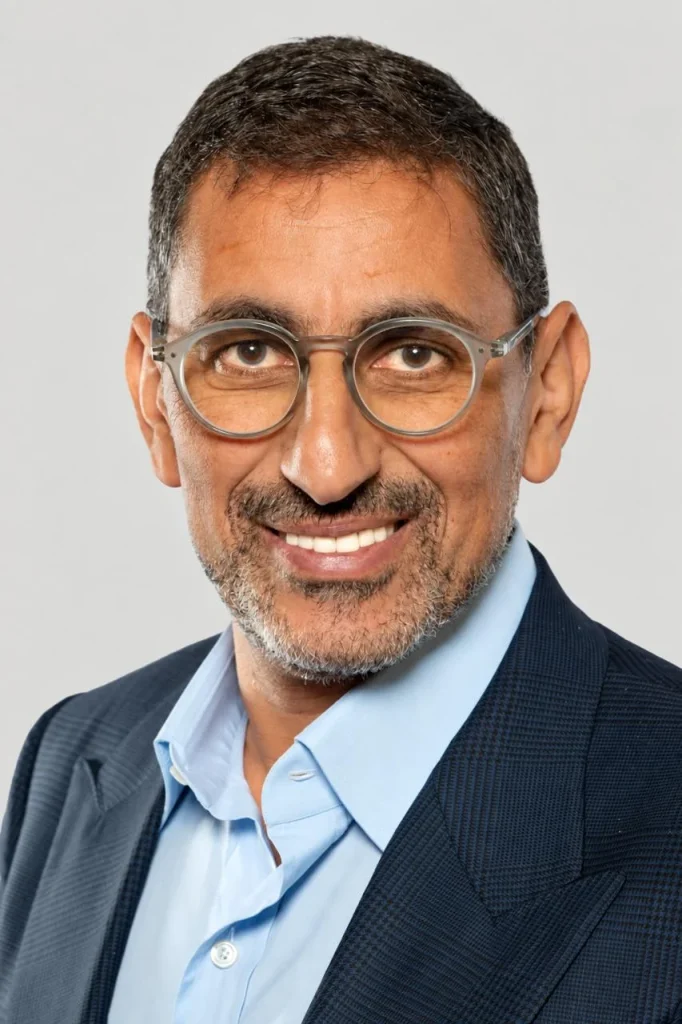
In an exclusive interview with Intelligent CIO Middle East, Maged Wassim, Vice President and Managing Director for the Middle East and Africa at Kyndryl, discusses his immediate priorities for the region, the growing demand for infrastructure modernisation and cyber resilience and why enterprises need a structured approach to moving AI from experimentation into production.
What are your immediate priorities at Kyndryl?
My immediate priority is taking care of our customers. Kyndryl has a long legacy in this market, going back more than 70 years through its IBM heritage, and we support mission-critical infrastructure that organisations simply cannot afford to have disrupted.
For example, we support operations and infrastructure for one of the biggest airlines in the region. We also support mission-critical environments for mining companies in Saudi Arabia and oil companies in Kuwait. So, my first priority is ensuring resilience and stability.
At the same time, customers want to introduce AI. It is almost like wanting to fly the plane while changing the tyres. They want stable operations with no disruption while transforming the business with AI.
Cyberattacks are increasing and disaster recovery requirements are becoming more demanding, so stability remains critical. But while providing that stability, we also need to help customers introduce AI, test it and make it work within their existing environments.
My second priority is strengthening and expanding our team. I joined Kyndryl three months ago and see enormous potential across the region. Despite the geopolitical environment, IT demand remains strong, with significant RFP activity.
So, my priorities are straightforward: keep our customers stable, grow the business and establish Kyndryl as a much bigger player in the region.
If you look across your portfolio – AI, cloud, cybersecurity, modernisation and managed services – where do you expect the strongest growth to come from?
We focus on three key areas. The first is infrastructure management, covering both on-premises infrastructure and public cloud. This is one of our core strengths and a major part of what we do for customers today.
The second is application modernisation. Customers want to modernise their applications and environments, increasingly using AI and other technologies to improve efficiency and customer service.
The third is cybersecurity, resilience and recovery. Across all three areas, we are now infusing AI.
Customers are asking, “You already run my infrastructure, but can you run it more efficiently using AI?” The answer is yes. AI can improve network management, infrastructure operations and security.
Cybersecurity is particularly important because AI is also enabling threats to become faster and more sophisticated. Organisations therefore need to use AI to detect and respond to these attacks.
Our focus is on infrastructure and public cloud, modernisation, cybersecurity, resilience and recovery, with AI increasingly embedded across all these areas.
Coming back to AI, we are seeing a lot of pilots and proof-of-concepts, but many organisations are still struggling to move into production. Is infrastructure part of the problem? Have organisations underestimated the need to modernise before deploying AI at scale?
We already have AI running in production in many places. It takes courage from CIOs to make that move, but we are seeing it happen.
For example, we run infrastructure for a large mining company in Saudi Arabia, where more than 30% of the processes we manage have been transformed into AI-driven processes in production. These include network management, user identities, creating and cancelling users, approvals and end-user support.
Customers are increasingly asking us to introduce AI into existing contracts rather than treating it as a separate project. They expect the efficiencies from AI to be reflected in how services are delivered and priced.
Of course, legacy infrastructure needs to be modernised where necessary. We also need to ensure our people are AI-ready. A network engineer, for example, needs to understand how AI can improve the work they do. That means training people, giving them the right tools, experimenting with AI and auditing the processes being transformed.
Organisations should identify and prioritise AI use cases according to complexity. Start with the low-hanging fruit, automate those processes and introduce AI. More complex use cases may require significant modernisation.
That is also where ownership becomes important. If an AI use case does not deliver the expected outcome, who owns the problem: IT or the business? This is one of the key challenges as organisations move AI into production.
There is a lot of pressure from the business on IT teams to implement AI. How important is it to establish clear ownership and governance?
When you implement AI, who owns the outcome? If AI makes the wrong decision, is that an IT mistake or a business mistake?
Complex use cases require collaboration, change management and clear accountability. You also need to build the platform properly.
I speak to many CIOs who are being presented with individual AI solutions from different parts of the organisation. A board member might meet a company offering an AI solution and tell the CIO, “Go and implement this.”
The result can be AI here, AI there and AI somewhere else, without an overarching architecture. How do you integrate these solutions and maintain continuity over the next two years? Will the AI tool you implement today still be relevant in a year’s time?
That is why organisations need an architecture that integrates AI with other systems and ensures investments remain viable.
So, does the AI strategy need to be closely aligned with the broader business strategy?
It needs an enterprise platform behind it. Organisations must determine how AI will be implemented, how data will be managed, how people will use it and how it will be governed.
Every new AI idea should fit within that structure. This is what we call an AI framework, architecture or platform.
At Kyndryl, for example, we have the Kyndryl Agentic AI Framework, an enterprise-grade framework designed to help organisations implement AI in a structured way and maintain it over the longer term. AI investments need to be sustainable enough to generate a return.

