


Dr Fayid Kadambodan, Assistant Director – Enterprise Solutions – Digital, Dubai Integrated Economic Zones Authority, believes data is the DNA of AI and that Dubai’s competitive edge won’t come from building more data centres but from connecting the right infrastructure, data and governance.
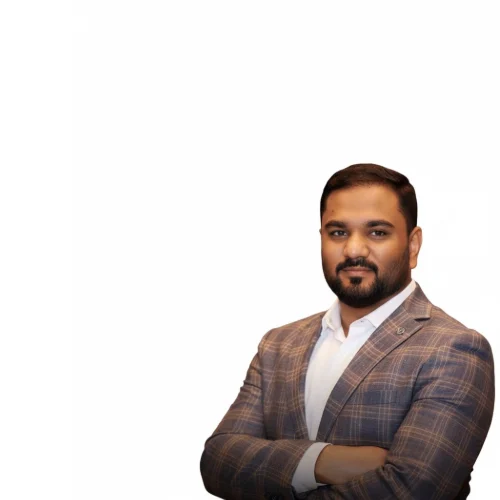
Dr Fayid Kadambodan is Assistant Director of Enterprise Solutions at the Dubai Integrated Economic Zones Authority (DIEZ), where he leads digital modernisation across the organisation’s multiple entities. He holds a PhD in AI and has led several large-scale transformation programmes, bringing fragmented systems together, simplifying core business processes and improving both efficiency and employee experience.
His work focuses on AI-enabled governance, intelligent automation and data-driven decision-making, with an emphasis on turning advanced technology into measurable business value. He is particularly interested in building smart workplaces and resilient digital ecosystems that support the UAE’s vision for next-generation government.
How would you describe the Middle East’s current tech market and what has been the biggest catalyst for change over the last year?
The Middle East has moved beyond being a technology adoption market; it is increasingly becoming a technology innovation and investment hub. The UAE and Saudi Arabia in particular are accelerating their ambitions around AI, digital government, cloud infrastructure and the knowledge economy.
The biggest catalyst over the last year has been the shift from AI experimentation to enterprise-wide AI adoption. Organisations are no longer asking whether they should adopt AI, but how quickly they can integrate it into their business models, decision-making and customer experiences. This shift is creating demand for a much stronger digital foundation, including data infrastructure, cybersecurity, cloud capabilities and computing capacity.
What do you think attracts so many tech companies to the UAE and wider region?
The UAE offers a compelling combination of strategic location, business-friendly regulation, government vision, global connectivity and access to international talent and markets.
What differentiates the UAE is the alignment between government ambition and private-sector execution. There is a clear willingness to embrace emerging technologies, invest in digital infrastructure and create an environment where innovation can move from concept to implementation.
For technology companies, this is more than an opportunity to establish a regional presence. It is an opportunity to participate in building the next generation of digital economies.
What kinds of tech businesses are you seeing most demand from at the moment?
We’re seeing growing demand across AI, cloud computing, cybersecurity, data analytics, enterprise automation and digital infrastructure.
However, I believe the most significant opportunity lies at the intersection of these technologies. AI companies need reliable data platforms, cloud providers need scalable infrastructure and enterprises need secure integration between their business applications and intelligent systems.
There is also increasing interest in Agentic AI, where systems can move beyond generating information to executing tasks, coordinating workflows and supporting business decisions. This will create a new generation of technology businesses focused on intelligent enterprise solutions.
What does your role as IT Director involve day to day and what are your biggest priorities moving into 2027?
My role goes beyond managing technology operations. It is about ensuring that technology directly supports organisational strategy, operational excellence and long-term business value.
My day-to-day responsibilities span enterprise architecture, digital transformation, ERP and enterprise applications, AI adoption, data governance, cybersecurity alignment, technology investment and stakeholder engagement.
Moving into 2027, my priorities are centred around three areas: building an AI-ready enterprise, strengthening data governance and accelerating intelligent automation.
I also believe the next phase of digital transformation must focus on measurable business outcomes. Technology investments should not simply deliver new systems; they should simplify processes, improve productivity, strengthen decision-making and create better experiences for businesses and customers.
How are organisations in the region using AI and digital tools to improve their own operations?
Organisations are increasingly moving from isolated digital projects towards connected, intelligent operations.
We are seeing AI being applied to predictive analytics, customer engagement, document intelligence, knowledge management, process automation and decision support. Enterprise platforms are also becoming more intelligent, connecting data across finance, HR, procurement, customer services and operations.
My perspective is that data is the DNA of AI. Without reliable, structured, governed and accessible data, even the most advanced AI models will struggle to deliver meaningful business value.
The next major shift will be towards Agentic AI, where intelligent systems can understand business objectives, coordinate multiple processes and execute approved actions with appropriate human oversight. This is where organisations can achieve a fundamentally different level of operational efficiency.
What do businesses expect from the digital infrastructure in a free zone today, compared with a few years ago?
A few years ago, businesses primarily expected reliable connectivity, basic IT services and access to digital government transactions.
Today, expectations are fundamentally different. Businesses want a digitally connected ecosystem that enables them to establish, operate, scale and innovate with minimal friction.
This includes secure digital onboarding, integrated government services, cloud connectivity, API-driven platforms, intelligent customer experiences, data protection and reliable cybersecurity.
A modern free zone must be more than a physical business destination. It should function as a digital business ecosystem, where technology becomes an enabler of competitiveness, operational efficiency and investment attraction.
Ultimately, the quality of a free zone’s digital infrastructure is becoming part of its value proposition to investors.
As more companies adopt AI, what does that mean for the amount of data centre capacity Dubai will need?
AI will fundamentally change the scale and nature of computing demand. Traditional enterprise workloads are increasingly being complemented by Generative AI, large-scale model training, inference and autonomous intelligent systems.
This will create sustained demand for high-performance computing, GPU infrastructure, high-density racks, advanced cooling and resilient power capacity.
For Dubai, the opportunity is not simply about increasing the number of data centres, it’s about developing the right infrastructure to support the next generation of AI workloads.
We need to think about capacity, energy efficiency, connectivity, data sovereignty and scalability together. The real competitive advantage will belong to markets that can provide reliable, sustainable and secure computing infrastructure at scale.
What roles do partnerships between public bodies and private developers play in building the region’s data centre capacity?
Public-private partnerships are essential because the development of data centre infrastructure requires significant capital investment, long-term planning, regulatory clarity and coordination across multiple sectors.
Governments can establish the strategic direction, create enabling policies, support digital infrastructure planning and provide regulatory certainty. Private developers and technology providers bring investment, engineering expertise, operational capabilities and global technology partnerships.
The strongest model is one where both sides work towards a shared national digital infrastructure vision.
This collaboration becomes particularly important in areas such as power availability, renewable energy, connectivity, land planning, data protection and sovereign cloud capabilities.
Building the region’s AI future cannot be the responsibility of technology companies alone. It requires an ecosystem approach.
What does the region need to get right on infrastructure to keep up with demand for AI?
The region needs to look beyond computing capacity and take a holistic approach to digital infrastructure.
There are five critical foundations: reliable and scalable power, energy-efficient cooling, high-speed connectivity, secure and sovereign data infrastructure and a strong cybersecurity framework.
We must also invest in the underlying data ecosystem. AI-readiness is not just about having access to powerful models or GPUs; it is about ensuring that the data feeding these systems is accurate, governed, secure and fit for purpose.
Another important consideration is sustainability. As AI workloads increase, energy efficiency and responsible resource utilisation must become fundamental design principles rather than afterthoughts.
The region has an opportunity to build infrastructure that is not only technologically advanced but also resilient, sustainable and trusted.
Where do you see the biggest opportunities for Dubai’s tech sector over the next few years?
I see enormous opportunities in Sovereign AI, Agentic AI, advanced data centres, cloud infrastructure, cybersecurity, smart government and intelligent enterprise ecosystems.
Dubai has the potential to position itself not just as a regional technology hub, but as a global reference point for how governments and businesses can adopt AI responsibly and at scale.
One particularly exciting opportunity is the development of AI-enabled public services and enterprise ecosystems, where data, digital platforms and intelligent automation work together to improve productivity and user experiences.
My view is that the next competitive advantage will not come from simply adopting more technology, but from how effectively organisations connect infrastructure, data, governance and AI to create measurable economic and societal value.
The future belongs to economies that can turn data into intelligence, intelligence into action and innovation into measurable impact.
The views expressed in this article are those of Dr Fayid Kadambodan and do not necessarily reflect those of Dubai Integrated Economic Zones Authority.

