


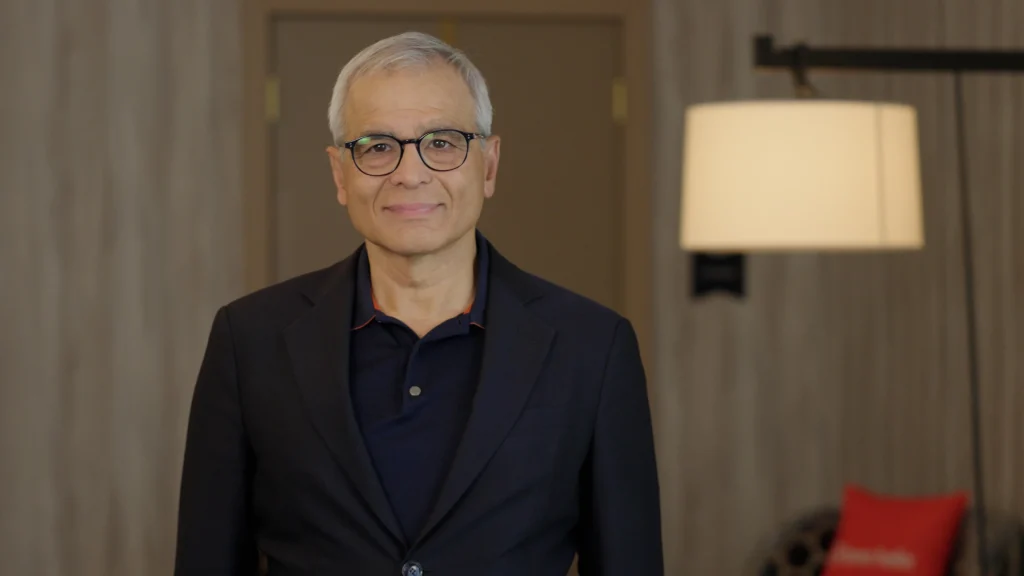
As BMC Helix begins a new chapter as an independent company, its CEO and President, Ali Siddiqui discusses how agentic AI is transforming IT operations, why an open approach to ServiceOps is essential and how enterprises can move towards autonomous IT while maintaining governance, trust and measurable business value.
Now that BMC Helix is operating as an independent company, what does this mean for your innovation strategy, investment priorities and market expansion?
These are very exciting times for Helix. We are particularly enthusiastic about the significant investment from Montagu Capital, which is now our majority shareholder. They want us to grow, and they understand that sustainable growth can only come from delivering greater value to customers.
Our focus has always been on ensuring that customers derive meaningful value from Helix. With this new investment, we can accelerate innovation while strengthening our customer success initiatives.
We are investing significantly in sales and customer success, not just research and development. This will allow us to support customers and partners more effectively and help them realise greater value from their investments.
Ultimately, delivering customer value is what enables us to grow.
You have spoken about resetting the limits of IT. How is agentic AI changing the economics of IT operations and creating new opportunities for innovation?
Our vision and strategy are centred on resetting the limits of IT to create new possibilities for innovation. That is also the theme of our conferences.
Modern platforms such as Helix Agentic ServiceOps can fundamentally change how people work. Their agentic capabilities enable employees to become significantly more productive, creating greater opportunities for innovation.
Many tedious and repetitive tasks can now be handled automatically by AI, allowing people to focus on higher-value activities.
Consider the reality facing most IT organisations today. Their teams are already operating at 120% capacity. How do you enable them to accomplish more?
The answer is not simply cost-cutting. It is about equipping them with next-generation technologies that improve productivity and expand their capabilities.
Imagine IT professionals and digital full-time equivalents working together in a symbiotic relationship, with AI handling repetitive operational activities while people concentrate on innovation and more strategic responsibilities.
That is what we mean by resetting the limits of IT.
Is ServiceOps simply the convergence of IT service management and AIOps, or does it represent a fundamentally different way of managing enterprise IT?
If you look at how IT has traditionally operated, organisations have developed numerous silos. Operating in silos is no longer effective, and it certainly cannot be a competitive differentiator.
ServiceOps is fundamentally about changing how IT operates, delivers business value and accelerates the outcomes organisations are trying to achieve.
With agentic AI, we are entering a different world. AI agents do not recognise organisational boundaries in the same way people do. They do not understand the traditional silos that have developed over the past 20 or 30 years.
What matters is how you build trustworthy agents, establish governance and enable those agents to work across different systems, processes and organisational boundaries.
That is the real opportunity with ServiceOps.
Instead of managing isolated processes, organisations can use AI agents to access data across multiple systems, understand end-to-end business requirements and execute the activities necessary to deliver outcomes.
It represents a fundamental shift from managing individual IT functions towards orchestrating business outcomes across the enterprise.
How close are enterprises to achieving autonomous IT operations, where AI agents can detect, diagnose and resolve incidents independently? More importantly, how can organisations trust these agents to make the right decisions?
The success of AI fundamentally depends on establishing the right foundations. That is why we have introduced the concept of AgentOps alongside ServiceOps.
We need to ensure that AI agents are trustworthy and secure. Organisations must address hallucinations, governance and repeatability before allowing agents to operate autonomously.
Without these foundations, many agentic AI initiatives will struggle to deliver meaningful outcomes.
We are already seeing customers benefit from automating tedious and repetitive activities. With the right AgentOps capabilities and a platform such as Helix Agentic ServiceOps, many of these tasks can become autonomous.
However, human judgement remains important, particularly as organisations expand the scope of autonomous operations.
Over time, combining AI-driven automation with appropriate human oversight can deliver substantial productivity improvements while maintaining control.
Ultimately, the business case must stand on its own. Organisations need to demonstrate that autonomous operations are delivering measurable value against their business objectives.
That cannot happen without the right foundations.
Traditional AIOps already uses machine learning for incident correlation and root cause analysis. What distinguishes AgentOps from AIOps?
There are two ways to look at this.
AIOps is primarily concerned with incident correlation, noise reduction, root cause analysis and reducing the number of support tickets. It helps organisations identify problems proactively and improve operational efficiency.
AgentOps focuses more on governance, trustworthiness and security. These are the foundations required to deploy AI agents responsibly.
It is also about measuring outcomes.
For example, when an organisation deploys an agentic AI use case, it should be able to answer several questions. What productivity improvement has been achieved? What was the baseline? Did the initiative meet its business objectives?
That is how we approach AgentOps.
While AIOps helps organisations identify and address operational issues, AgentOps provides the governance and measurement capabilities needed to ensure AI agents operate securely, responsibly and effectively.
Both are important, but they address different requirements.
Are you bringing ITSM, AIOps, observability and automation together on a unified platform, or is Helix better understood as an open ecosystem?
The Helix platform brings these capabilities together, but there is an important distinction: it is an open platform.
We do not tell customers that they must use only our technology or abandon their existing monitoring and automation tools.
Our objective is not necessarily to have one platform for everything. It is to establish one consistent way of working.
Customers can integrate different monitoring and automation solutions while benefiting from common processes, standardised capabilities and improved operational efficiency.
They can still achieve the productivity gains and enhanced customer and employee experiences they are looking for.
So, is it one platform? Yes, in terms of standardisation and capabilities. However, it remains open, allowing customers to retain their existing technology investments.
We are not suggesting that organisations need to purchase everything from us.
Many enterprises have invested heavily in legacy ITSM, monitoring and automation platforms. How can they modernise their operations without replacing these systems?
We strongly believe that organisations should not have to rip and replace their existing systems to realise value.
Our approach is to integrate with legacy tools, whether they are monitoring, service management or automation solutions, while still delivering Agentic ServiceOps capabilities.
That is the journey many of our customers are taking.
This approach is also important when organisations acquire other companies.
Imagine an enterprise acquiring a business that uses completely different monitoring tools. Does that mean it must replace those tools to maintain a consistent operational standard?
That would create unnecessary complexity and cost.
With Helix Agentic ServiceOps, we can integrate the acquired company’s monitoring tools while maintaining the same standardisation, agentic capabilities and proactive operational capabilities.
Customers can extend their existing investments rather than replace them.
Competitors such as ServiceNow, Dynatrace and Splunk are also expanding their AI capabilities. Where do you see BMC Helix’s competitive differentiation?
I think there are two important aspects.
First, many competing approaches require customers to replace existing systems and adopt a particular vendor’s technology stack. We believe an open-first strategy is the right approach.
Second, we believe we are uniquely positioned to address both AIOps monitoring and ITSM, while also offering comprehensive enterprise service management capabilities.
Our agentic capabilities are another important differentiator. Everyone is working to advance these technologies, and we were first to market with our capabilities. We believe we have a market-leading position in this area.
However, I would emphasise our open-first philosophy. Our ability to analyse both ticket logs and monitoring data, while integrating with third-party tools, is a significant advantage.
That is increasingly what we hear from customers, and it is one of the reasons they choose Helix.
CIOs are under growing pressure to demonstrate returns from AI investments. How can they build a compelling business case for Agentic ServiceOps?
Whenever we engage with customers, even before they purchase our platform, we emphasise the importance of starting with measurable return on investment.
There must be a clearly defined business case. We work collaboratively with customers to establish that business case, and it cannot focus solely on productivity improvements.
Productivity is important, but organisations must also consider broader business outcomes, including reducing operational noise and improving employee and customer experiences.
Delivering an excellent employee and customer experience is critical for businesses today.
When customers adopt Helix, we continuously demonstrate the value they are receiving and measure progress against their original objectives.
We call this the value continuum. It is an ongoing journey in which customers can see how their technology investments are contributing to business performance.
Every agentic AI use case must have a clearly defined outcome and a measurable ROI.
Without measurement, how can an organisation determine whether it has achieved what it set out to accomplish?
You recently introduced the Helix Agent Marketplace. Is this essentially an enterprise application store for AI agents, and how do you intend to monetise it?
Yes, that is a useful way to describe it, and the marketplace has been a great success since its launch a few months ago.
The objective is to give customers more choice while building a broader ecosystem around Helix. It allows organisations to explore different approaches to their use cases and extend the capabilities of the Helix platform.
From a monetisation perspective, customers are already paying for Helix, so I do not necessarily feel compelled to monetise the marketplace separately. My priority is to build an ecosystem that enables customers to derive even greater value from their existing Helix investments.
If we can achieve that through the Agent Marketplace, it creates a win-win situation for everyone. That is how we think about the marketplace and its role in our broader strategy.

