


Strong technology leadership depends as much on stewardship, governance and trust as it does on delivering successful Digital Transformation. Dr. Francis Mushi, Chief Information Officer, IXS Coatings, tells us why building resilient organisations that outlast individual leaders, embedding accountability into decision-making and putting business outcomes ahead of technology are essential for long-term success.
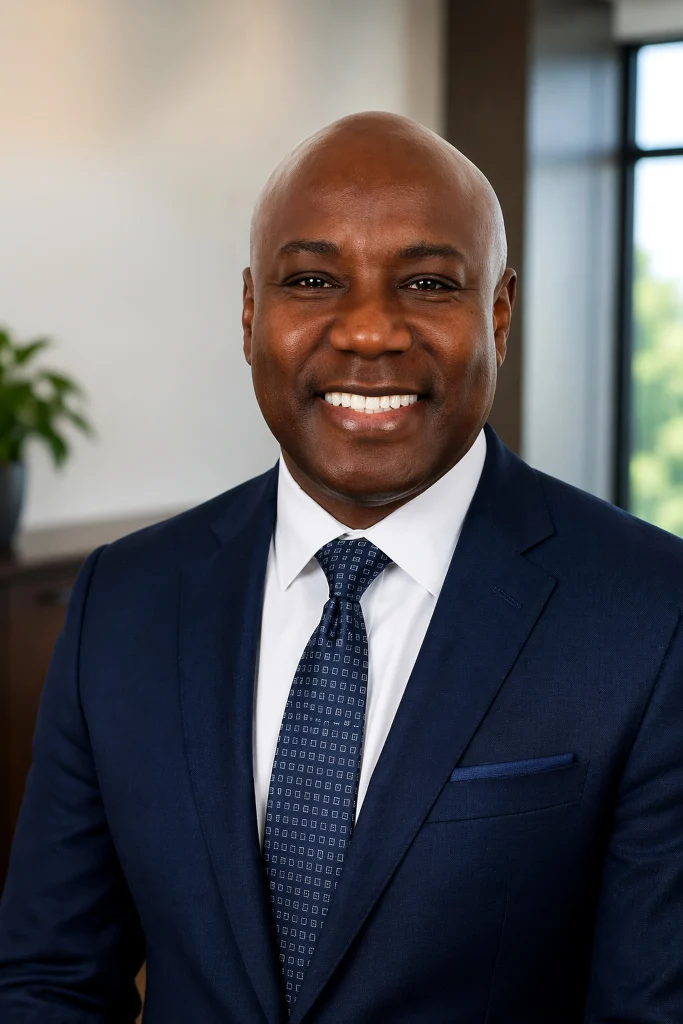
Your book, Stewardship in Motion: Leadership Lessons from the CIO’s Seat, focuses on stewardship, trust and accountability. What inspired you to write it, and what do you hope technology leaders will take away from it?
The book grew out of a pattern I kept seeing across two decades in technology leadership. Organisations would pour enormous energy into transformation and the results would rise or fall not on the technology but on how leadership behaved. When leadership was personality-driven, progress depended on one person’s presence, memory and force of will. When it was system-driven, progress survived turnover, budget cycles and crises. I wrote Stewardship in Motion to give leaders a practical way to build the second kind of organisation.
What I hope technology leaders take away is a shift in identity. A CIO is not the hero of the story. A CIO is a steward of capabilities, people and trust that existed before us and should outlast us. Once you lead from that position, your decisions about governance, succession, vendors and budgets change in very practical ways.
What was the key message you wanted to convey through Stewardship in Motion, and why do you believe it is particularly relevant for today’s technology leaders?
The key message is simple: stewardship over ego and systems over personalities. Most transformations do not fail because the technology was wrong. They fail because the operating model around the technology was built on individual heroics rather than durable systems of governance, accountability and trust.
That message is especially relevant now because the pace of change has never been higher. Artificial Intelligence, cybersecurity threats and constant restructuring mean no single leader can hold the whole picture in their head. Boards and CEOs are also asking harder questions about technology value and risk. The leaders who thrive in this environment can show that their organisation runs on documented decisions, clear ownership and repeatable processes rather than on charisma. That is what earns trust at the executive table and trust is the real currency of a CIO.
If readers could take away just one lesson from Stewardship in Motion, what would you hope it would be, and how could it influence the way they lead?
Build an organisation that does not need you. That is the one lesson. If you lead well, your absence should be a non-event. Decisions are documented, priorities are governed by a system rather than by access to you, your team knows how to escalate and your successor can find the logic behind every major commitment.
That single idea changes daily behaviour. You stop being the bottleneck for approvals and start designing the mechanism that makes approvals consistent. You invest in your directors and managers as decision makers rather than executors. You measure yourself not by how indispensable you feel but by how well the system performs when you step away. Leaders who internalise this build calmer organisations and calm organisations transform faster because energy goes into the work instead of into managing personalities.
Looking back on your career, what advice would you give to aspiring CIOs who want to become effective business leaders rather than simply technology leaders?
First, learn how your company makes money before you try to change how it runs. Sit with operations, sales and finance. Understand margin, cash and the customer promise. When you speak the language of the business, technology conversations become business conversations and that is where influence lives.
Second, own outcomes, not just systems. Anyone can deploy a platform. A business leader owns adoption, value realisation and the honest conversation when something is not working.
Third, build your credibility on governance and follow-through. Deliver what you commit, document what you decide and hold vendors and teams accountable with respect and consistency. Executives forgive honest constraints. They do not forgive surprises.
Finally, develop people deliberately. The strongest signal that you have become a business leader is a bench of people who can lead without you.
How has your experience as CIO at IXS Coatings shaped your views on leadership in an increasingly digital business environment?
IXS Coatings is a global manufacturer with multiple business units, operations in several countries and a technology landscape that came together through growth and acquisition. That environment teaches you quickly that leadership in a digital business is about continuity and trust, not novelty. When systems support production lines, quality and customer commitments, downtime is not an inconvenience. It is a broken promise.
Leading here has sharpened three convictions. Governance must be strong enough to hold a diverse enterprise together and light enough that business units can still move. Vendor relationships must be managed as accountability partnerships, with clear commitments on both sides. And every major initiative must be designed to survive leadership change, because in a dynamic operating environment it will be tested. Manufacturing rewards leaders who build for durability.
Many Digital Transformation programmes fall short of expectations. In your experience, what separates those that succeed from those that fail?
Successful transformations are business-led and system-governed. The ones that succeed have a clear owner in the business, outcomes defined in operational and financial terms and a governance rhythm that surfaces problems early and makes decisions quickly. They treat adoption and change management as core scope rather than an afterthought and they measure value after go-live instead of declaring victory at it.
The ones that fall short usually share a different signature. They are sponsored by a personality rather than anchored in a system, so momentum collapses when that person moves on. Scope grows because nobody is empowered to say no. Vendors are managed on relationships instead of commitments. And the organisation is asked to absorb change faster than it can build trust in it. Technology is rarely the differentiator. Discipline, ownership and honesty about progress are.
How do you balance driving innovation with maintaining operational stability and resilience across the business?
I treat stability as the licence to innovate. Security, resilience, service reliability and disciplined change management are the fundamentals. If they are not solid, every new initiative borrows against trust the organisation has not yet earned. So we protect the run of the business first and make that performance visible.
From there, innovation is managed as a portfolio with guardrails. Ideas start small, with a clear hypothesis, a defined owner and criteria for scaling or stopping. Higher-risk changes go through stronger controls, while lower-risk experiments get room to move quickly. Governance is designed as an enabler that gives people a fast and predictable path to yes, not a brake.
The balance is ultimately cultural. When teams see that we finish what we start, retire what does not work and never gamble with operations, they bring forward bolder ideas. Stability and innovation are not rivals. One funds the other.

