

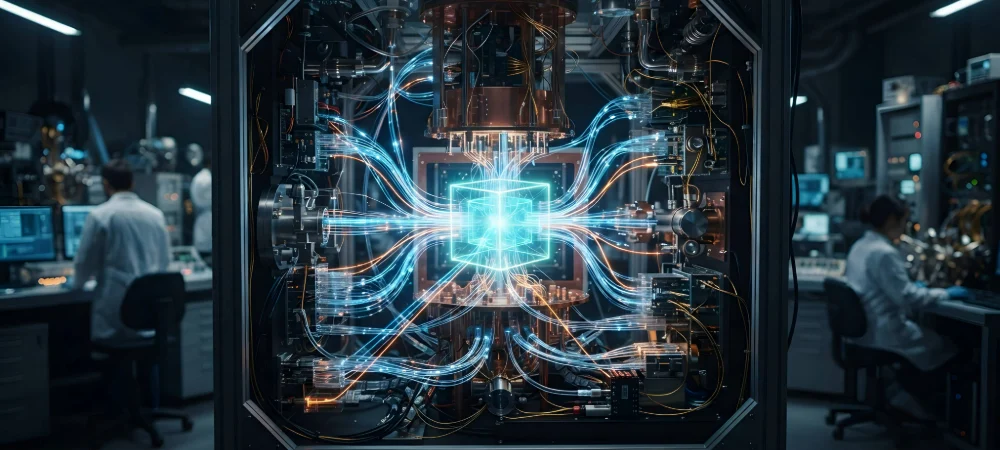
California has moved to turn its quantum and fusion research base into an industrial advantage, signing new fusion legislation while committing US$30 million to quantum and deep-space research.
Governor Gavin Newsom announced the measures at a UC Berkeley quantum laboratory, positioning state funding, research institutions and private investment behind technologies increasingly viewed as strategic infrastructure.
The new funding will support quantum research, public-private partnerships and a start-up ecosystem, building on the Quantum California initiative launched in 2025. California has also backed workforce programmes, research facilities and regional development efforts aimed at expanding the sector.
Alongside the investment, Newsom signed SB 925 and AB 2647, legislation designed to accelerate fusion development and reassess the role of advanced nuclear power in California’s energy system.
SB 925 requires a statewide fusion strategy covering research, commercialisation, manufacturing and regulatory planning. AB 2647 calls for an assessment of new nuclear power plants and advanced nuclear technologies as California works towards 100% zero-carbon electricity by 2045.
The state already hosts two major US fusion facilities: the DIII-D National Fusion Facility in San Diego and Lawrence Livermore National Laboratory’s National Ignition Facility, which achieved laboratory fusion ignition in 2022.
California is also expanding its quantum infrastructure. State initiatives include the UCLA Center for Quantum Science and Engineering, workforce grants and support for university-led research.
The package signals a broader push to convert scientific leadership into advanced domestic manufacturing, skilled jobs and commercial technology, as global competition intensifies across quantum computing, advanced energy and strategic technology supply chains.

