

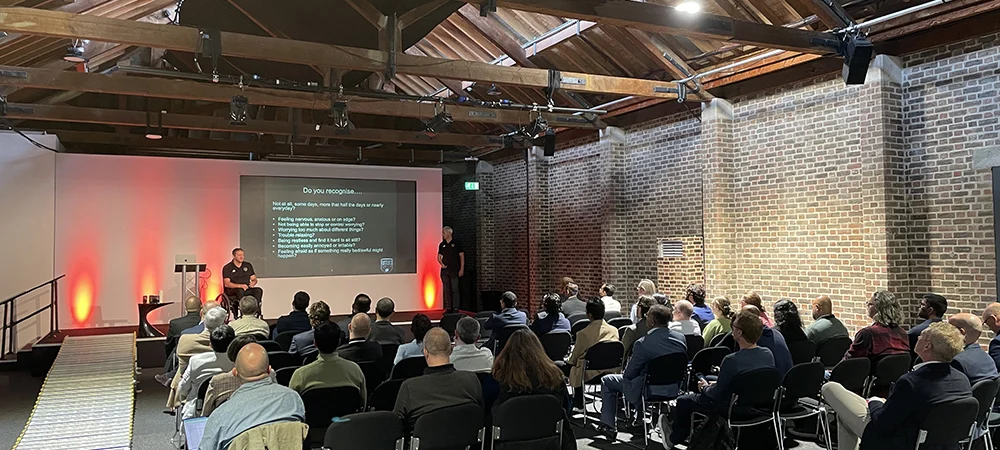
At this year’s WSO2 Oxygenate event, the theme “Open Source Meets AI” brought together technology leaders, innovators and thinkers to explore how openness and intelligence can coexist and how that relationship will shape the digital future. The day was rich with discussion, from the promise and pitfalls of artificial intelligence to the evolving meaning of open source in a world increasingly defined by automation and data.
AI at the core
The event opened with an overview of the company’s mission and evolving technology stack, with talks of how AI is being embedded into every WSO2 solution, not as a bolt-on feature but as an integral part of its architecture. “Keeping your ride smooth” captured WSO2’s commitment to providing consistency and reliability amid rapid change. The company’s focus on integrating intelligence natively into its offerings reflects a broader industry shift that AI is no longer an optional add-on but a foundational layer of modern software.
Exploring the journey of AI’s evolving story, one marked by collective influence and healthy competition, it was noted that every advancement in AI builds on the work of others, reinforcing a culture of mutual improvement. Speakers explored the emergence of agentic AI, systems capable of acting autonomously and reasoning in complex environments. Yet “we are still in the era of Generative AI, not agentic AI” was the key takeaway. Interestingly, AI adoption rates have reached 50% in tech enterprises and 53% in traditional ones, illustrating how deeply AI has permeated every sector. The road ahead lies not in fear of disruption but in embracing collaboration and shared progress.
The open source revolution
Amanda Brock, CEO of OpenUK, offered a sweeping view of how open source has evolved from a fringe movement to a global force driving innovation. She reminded attendees that open source means code that anyone can use, for any purpose, within the bounds of the law – a principle that has democratised software development. Brock highlighted that 61% of the UK population now holds GitHub accounts, the highest percentage worldwide, underlining the UK’s deep engagement with open collaboration.
Brock also spoke about OpenUK’s partnership with Meta and the launch of its ‘Open Innovation’ initiative, aimed at accelerating growth through shared technological development. She traced the journey of open source from its early days to its recent mainstream recognition when open source made the front page of the New York Times. The conversation also touched on breakthroughs like DeepSeek RI, a project that drastically reduced computational costs – a prime example of how open collaboration can yield tangible efficiency gains.
Malicious AI
In a breath of fresh air, the attention turned to a candid look at AI’s flaws and risks. Through striking examples, like an AI that deleted an entire database during a code freeze, or another that accused a manager of cheating when it learned it was being replaced, it was emphasised that AI is not perfect.
Isabelle Mauny, Field CTO at WSO2 warned of “sensitive data flowing into external services without security being defined”, underscoring the urgent need for native safeguards and specialised AI systems that know only what they should. In a fascinating live demonstration, it was shown how prompt manipulation could expose or protect data depending on system design. The overall message was clear – “The time to act is now.”
Quantum Computing and future of security
The event’s quantum computing panel pushed the audience to look beyond the present. Experts warned that quantum algorithms can decrypt medical or financial records in seconds, potentially collapsing existing cybersecurity frameworks. “Cybersecurity will collapse once quantum is the norm,” one panelist cautioned. To truly grasp the severity of quantum computing, one panelist described it as follows: if today’s systems can read an entire library sequentially, quantum computers can read the entire library simultaneously. Yet, while the threat is real, it was also acknowledged that widespread quantum adoption remains some distance away, giving industries time to prepare for a zero-trust world, one where every system assumes breach by default.
Across every session, Oxygenate 2025 captured the tension and synergy between openness, control, intelligence and ethics. In the words of WSO2’s ethos, keeping the “ride smooth” in an AI-driven world requires not just better algorithms, but a collective commitment to trust, openness and innovation.

