

Europe’s quantum ambitions are confronting an industrial reality: scientific breakthroughs mean little without the manufacturing infrastructure needed to turn experimental machines into scalable technology.
French quantum computing company Pasqal is leading a €50 million initiative designed to close that gap, coordinating 28 organisations across 11 European countries to establish a domestic supply chain for neutral-atom quantum hardware.
The three-year Q-PLANET programme, backed by the EU Chips Joint Undertaking and national and regional authorities, has entered its implementation phase following its launch in Brussels three months ago.
Its objective extends beyond developing faster quantum processors. Europe wants the capability to manufacture the specialised components underpinning quantum computers, sensors and communications systems without relying excessively on external suppliers.
That challenge is becoming increasingly urgent as governments position quantum computing alongside artificial intelligence and semiconductors as strategically important technologies.
Q-PLANET will concentrate on manufacturing technologies that remain difficult to produce consistently at industrial scale.
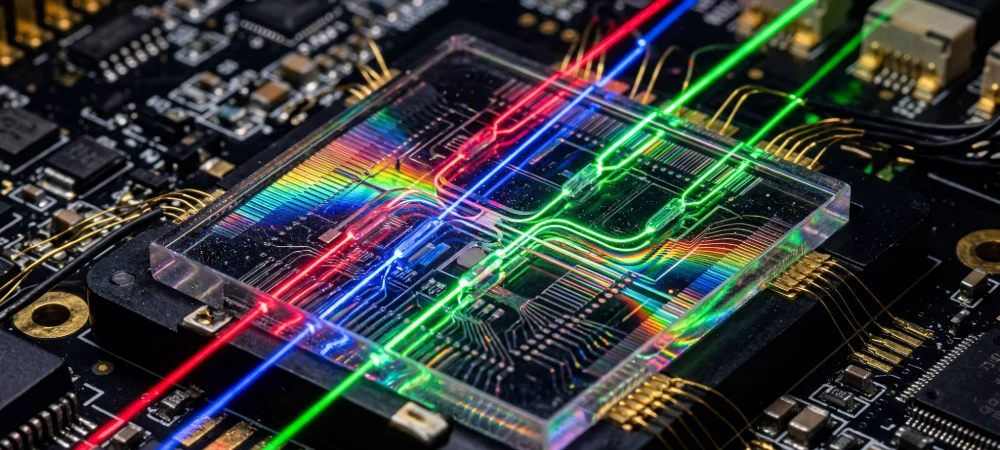
These include integrated laser sources operating at four wavelengths: 461, 698, 795 and 1013 nanometres. The consortium will also develop atom chips for quantum computing and sensing, alongside microfabricated vapour cells used in atomic clocks and field sensors.
Such components are fundamental to neutral-atom architectures, which manipulate individual atoms using precisely controlled laser systems to perform quantum operations.
Unlike conventional semiconductor processors, these systems depend on exceptionally accurate optical control, making component reliability and manufacturing repeatability critical barriers to commercial deployment.
Pasqal will lead development of chip-based lasers operating at 1013 nanometres while providing technical specifications for testing and validating additional components.
The programme will also establish standardised Process Design Kits and Assembly Design Kits, intended to help manufacturers translate experimental designs into repeatable fabrication processes.
Energy efficiency will be assessed throughout production, reflecting growing concerns about the infrastructure requirements of advanced computing.
The initiative aligns with the European Quantum Strategy and anticipated EU Quantum Act, both intended to strengthen regional technological capabilities.
But building a European supply chain does not automatically guarantee commercial competitiveness.
The consortium must demonstrate that components developed across multiple institutions can meet demanding performance requirements while supporting economically viable manufacturing.
Potential applications include drug discovery, materials research, precision sensing and secure communications, although widespread commercial adoption remains uncertain.
“Three months after our kick-off in Brussels, Q-PLANET has moved from ambition to execution,” said Loïc Henriet, Pasqal’s Chief Technology Officer.
The bigger test will come when European manufacturers attempt to scale these technologies beyond research facilities.
For Brussels, Q-PLANET represents more than another quantum research programme. It is an industrial experiment in whether Europe can convert scientific leadership into manufacturing independence before global competition intensifies.

