

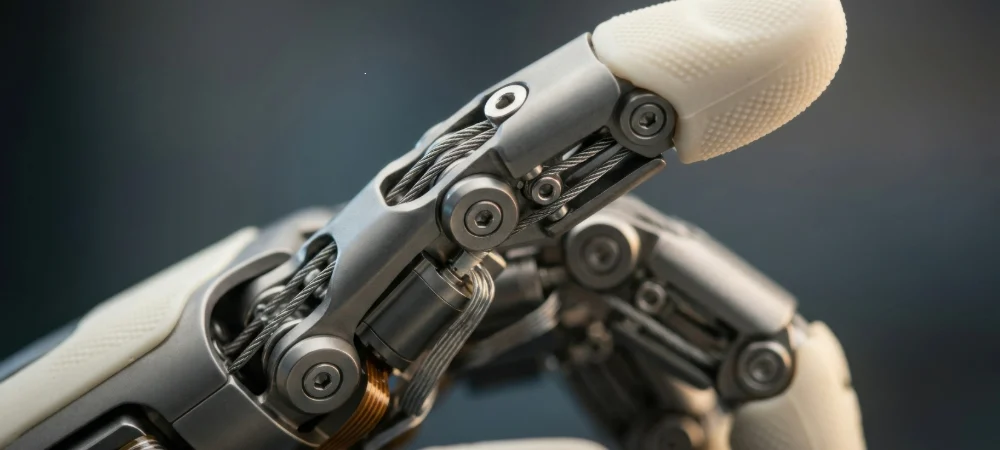
Siemens is connecting AI-driven product engineering with adaptive additive manufacturing, working with AGIBOT, EOS and AM Solutions to create an integrated production model capable of handling increasingly complex and customized industrial requirements.
Siemens is developing an AI-driven manufacturing system designed to connect product design directly with industrial production, potentially reducing the engineering time and complexity associated with customized components.
The German technology group is combining agentic artificial intelligence, industrial software and additive manufacturing to create an integrated Digital Thread spanning product development, virtual validation and production.
The initiative brings together Siemens, humanoid robotics company AGIBOT, industrial 3D printing specialist EOS and post-processing technology provider AM Solutions.
At its center is a shift toward manufacturing systems capable of responding to individual product requirements without requiring engineers to manually configure every stage of development.
Siemens is demonstrating the approach through an AI-enabled engineering workflow for a humanoid robot gripper, alongside plans for an adaptive production cell at its Electronics Factory in Erlangen, Germany.
The project reflects growing industrial interest in using AI not simply to automate existing operations but to coordinate engineering decisions across previously disconnected processes.
Engineering moves beyond manual design
Working with AGIBOT, Siemens is demonstrating how agentic AI can translate natural-language instructions into engineering activities that traditionally require specialist software expertise.
The demonstration focuses on a robotic gripper designed for different handling applications.
Rather than manually modifying the component for each task, users describe the object to be handled and the required operation.
An AI agent interprets those requirements, selects an appropriate gripper configuration and coordinates the engineering workflow.
Using Siemens Designcenter, the system adapts component geometry, performs simulations and validates the interface between the gripper and humanoid robot.
Model Context Protocol, or MCP, integration enables the AI agent to access engineering software functions and execute the necessary steps.
The workflow then prepares the resulting design data for additive manufacturing.
This approach could reduce the manual effort involved in developing specialized components while allowing engineers to validate designs virtually before committing manufacturing resources.
It also creates opportunities for users without extensive experience of individual engineering applications to participate in product development.
However, industrial deployment will still require controls around design accuracy, validation and engineering accountability.
“Industrial AI is fundamentally changing how we develop and manufacture products. Instead of manually designing variants in a time-consuming process, agentic workflows can orchestrate engineering tasks based on specific requirements. Additive manufacturing is the ideal complement because it enables individual designs to be flexibly turned into physical components. The next step is production that can respond just as flexibly to this variety,” said Karsten Heuser, Vice President Additive Manufacturing, Siemens.
Connecting engineering with production
The larger challenge for manufacturers is translating increasingly flexible engineering processes into production environments capable of handling different components efficiently.
Conventional manufacturing systems are frequently optimized for predictable production volumes and standardized processes.
Greater customization can introduce additional programming, machine setup and handling requirements, potentially increasing costs and production complexity.
Siemens aims to address these constraints through an adaptive production cell combining additive manufacturing equipment, industrial automation and integrated software.
Developed with EOS and AM Solutions, the cell is being established at Siemens’ Electronics Factory in Erlangen.
Its objective is to accommodate changing component designs and production requirements while maintaining repeatability and supporting future industrial scaling.
EOS contributes additive manufacturing expertise, while AM Solutions provides technology for automated post-processing.
The collaboration is intended to demonstrate how different manufacturing stages can operate within a coordinated production environment rather than as separate processes.
For manufacturers, the significance lies in reducing the operational barriers between producing a customized design and manufacturing it consistently.
Marie Niehaus-Langer, CEO, EOS, said the initiative represents a transition toward more intelligent industrial operations.
“The next stage in the evolution of Industry 4.0 is Industrial AI: the shift from connected and automated factories to intelligent, adaptive manufacturing. By combining Siemens’ expertise in industrial automation, software, and AI with EOS’ expertise in additive manufacturing, we aim to help shape this transformation. Together, we want to advance an independent European approach to the future of manufacturing and translate technological excellence into industrial competitiveness, resilience, and sovereignty,” she said.
Post-processing becomes central
A critical element of the project is the integration of post-processing into the manufacturing workflow.
Industrial additive manufacturing frequently requires additional operations after printing, including component finishing, cleaning and preparation for use.
These activities can become bottlenecks when production volumes increase or when different component designs require varying treatment.
Siemens and its partners are therefore incorporating automated post-processing into the adaptive production cell from the beginning.
The objective is to create a continuous manufacturing process that supports component quality and repeatability without treating downstream operations as an isolated activity.
David Soldan, Head of AM Solutions – 3D Post Processing Technology, said successful industrialization depends on integrating these stages.
“The industrialization of additive manufacturing does not end with the printing process. Only when downstream processing steps are seamlessly integrated into the production chain can additive components be manufactured efficiently and reproduced at scale. With the adaptive production cell, we want to demonstrate together how additive manufacturing and automated post-processing can be combined into an integrated industrial process,” he said.
Digital Thread underpins integration
The initiative depends on maintaining consistent information across engineering, manufacturing preparation, production and operational systems.
Siemens’ Digital Thread approach is intended to connect these activities through shared data and integrated software workflows.
This would allow information generated during design and simulation to remain available throughout manufacturing, reducing the need for repeated manual transfers between applications.
Industrial AI could then use that information to coordinate tasks, identify relevant process requirements and support production decisions.
For manufacturers managing increasingly complex product portfolios, such integration could improve visibility across development and production.
Nevertheless, the approach depends on reliable industrial data, secure software connections and clearly defined human oversight.
Quality assurance and traceability will remain essential as AI agents take responsibility for coordinating more engineering activities.
Building an adoption roadmap
Siemens is also extending its AM I Navigator offering with Industrial AI capabilities to help manufacturers identify suitable applications.
The framework evaluates opportunities across engineering, component design and additive manufacturing operations.
Companies can prioritize potential projects, assess their practical relevance and establish implementation roadmaps before expanding deployment.
This structured approach is intended to help manufacturers move beyond isolated AI experiments toward coordinated industrial applications.

